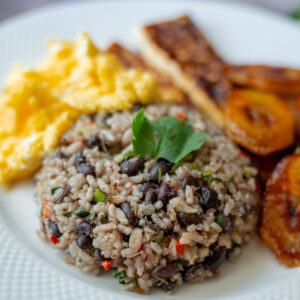
Gallo Pinto is Costa Rica’s signature rice and beans dish. It’s simple, flavorful, and part of everyday life back home. Made with leftover rice and beans, it turns humble ingredients into one of the most beloved meals in our cuisine.
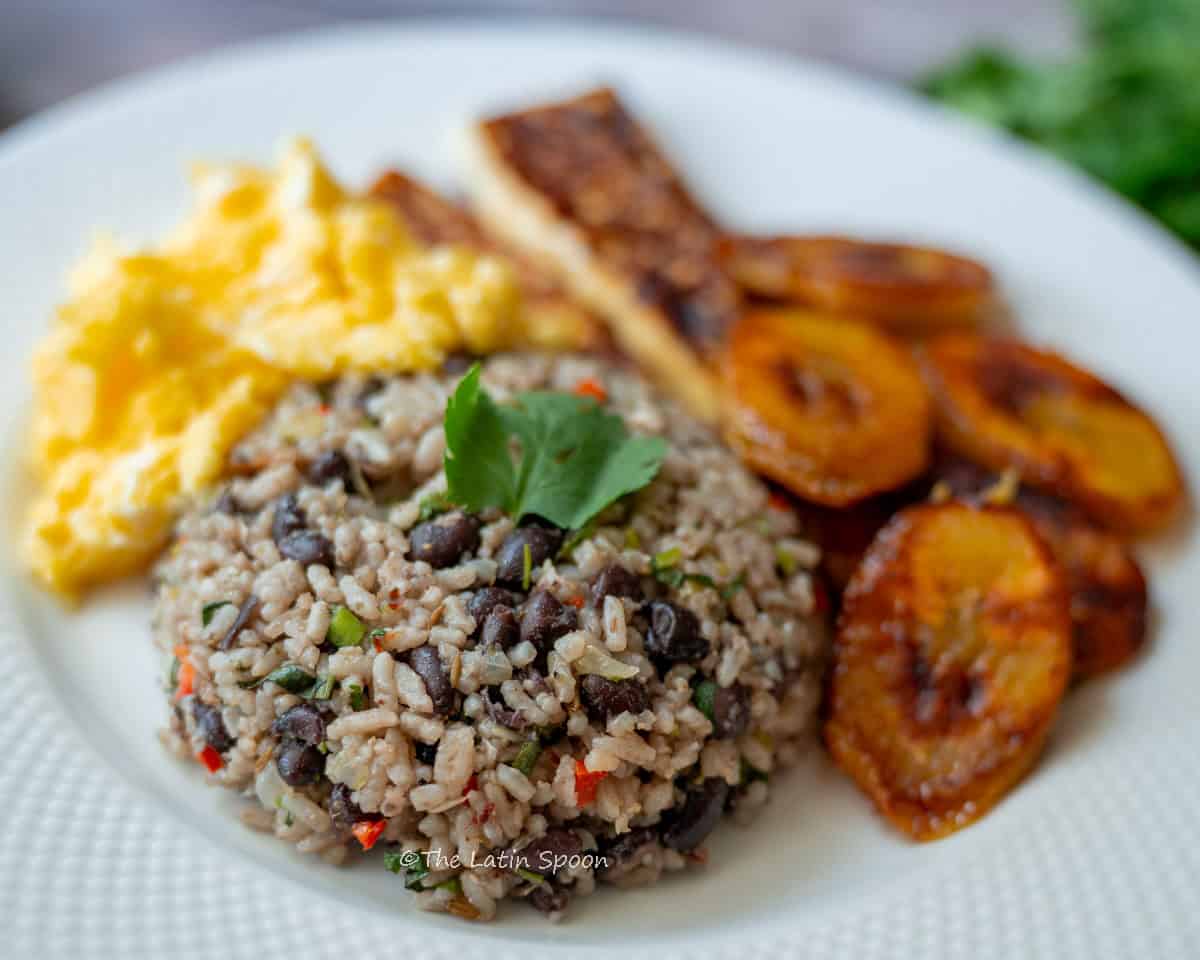
There’s no need to translate “Gallo Pinto” into English. What really matters is how it feels when you sit down to a plate of this Costa Rican classic: rice and beans perfectly cooked together, a little sofrito, some fresh herbs, and that flavor that instantly says Pura Vida. This is the dish we eat day in and day out, and today I’m showing you how to make it at home.
Costa Rican Pinto
What is Gallo Pinto?
Gallo Pinto is Costa Rica’s signature rice and beans dish, usually enjoyed for breakfast but loved at any time of day. It’s made by mixing cooked rice 🍚 with beans, a simple sofrito 🧅, and fresh herbs 🌿—and depending on the region or even the household, you’ll find it prepared a little differently each time.
It’s also a big part of Nicaraguan culture (we’re neighboring countries and share a lot of similarities), and yes, we also share Gallo Pinto. Actually, to the point where—believe it or not—Ticos and Nicas argue about who came up with the “brilliant” idea of mixing rice and beans together (yes, I’m being sarcastic).
What I do know is that Gallo Pinto is delicious—both the Nica and the Tico version. And today, I’m going to show you my version. Because even in my own family, you’ll find differences. My sister seasons the beans first; I season the rice first. In Guanacaste, people eat Gallo Pinto crispy (tostado). In San José (the capital, where I’m from), we eat it a little bit wetter (mojado). And you know what? All versions are amazing!
And don’t even get me started on Salsa Lizano. Most Costa Ricans love it (I don’t have statistics—I’m just a cook), but a big part of the population insists you should never add it to Gallo Pinto. I will leave it up to you to decide.
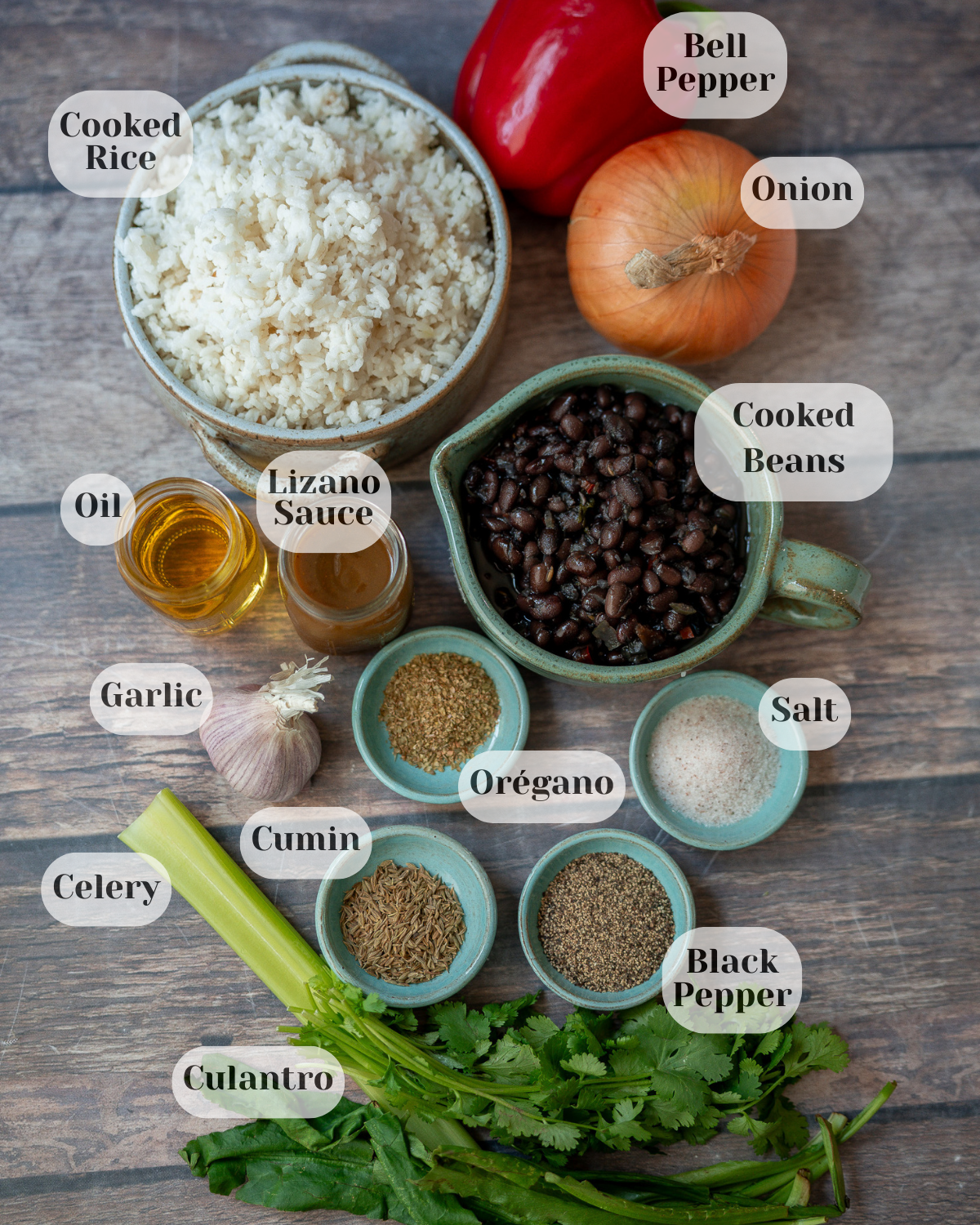
Ingredients for Costa Rican Gallo Pinto
These are the ingredients I’m using to make authentic Costa Rican Gallo Pinto. Each family has their own little twist, but this is how I grew up eating it at home.
🍚 Rice
I’m using long-grain white rice for this recipe (you can learn how to make Costa Rican white rice. Originally, Gallo Pinto was created to reuse leftover rice and beans. Since rice and beans are eaten every single day in Costa Rica, people usually cook fresh rice daily (or as often as possible). That means there are always leftovers in the fridge, plenty to make Pinto with.
Now, Pinto isn’t made every day; it’s made when you have enough leftover rice and beans sitting around. Why do I mention this? Because if all you’ve got is jasmine rice, use that. If what’s left in your fridge is basmati, guess what? It’ll work perfectly for your own version of Gallo Pinto. 😉
🥣Beans
Same thing with beans, leftover beans are meant to be used in Gallo Pinto. So just use whatever you have available: red, black, pinto, or even a mix of both (I’ve seen it, I’ve eaten it, and honestly…it’s pretty amazing if you ask me).
The flavor of Gallo Pinto starts with the rice and beans. For this recipe, I’m using leftover Costa Rican-style white rice and well-seasoned Costa Rican-style black beans. If you use plain rice or beans, you may need to adjust the seasoning.
🧅 Sofrito
Sofrito is the base of many Costa Rican and Latin American dishes. Each region has its own version, some include peppers like ají, cubanelle, or bell peppers, plus ingredients like tomato, celery, or cilantro. But no matter where you go, sofrito always shares the same three essentials: onions, peppers, garlic, and oil. Find the recipe here.
🥫 Salsa Lizano
This sauce originated in Costa Rica over 120 years ago, and it has become such a part of daily cooking that it’s now part of the culture itself. Learn how to make Lizano Sauce from scratch here. And if want to skip the process and get it delivered at your door, get Lizano Sauce here.
🌿 Herbs & Spices
I’m using oregano, cumin, black pepper, and salt. But you could also add extras like garlic powder, onion powder, paprika, chili powder, or annatto/achiote, there are so many ways to season Pinto.
For herbs, I’m using both cilantro (the regular kind you’ll find at any grocery store) and culantro ancho, which you can usually get at Mexican or Asian markets.
💡 Extra Tips for the Perfect Gallo Pinto
- Day-old rice and beans are your best friends. Pinto was created to reuse leftovers, so make your rice and beans the day before (or even two days before). Just keep them in an airtight container in the fridge.
- No leftovers? No problem. If you’re working with fresh rice and beans, make sure they cool completely before mixing them in, otherwise the texture will turn out mushy.
- Using canned beans? Be sure to drain them first. If you add the bean broth or liquid straight from the can, your Pinto will turn out too mushy.
- Make the sofrito ahead. Prepping onions, peppers, celery, and garlic in advance can cut down cooking time when you’re ready to make your Pinto. Learn how to make Sofrito here.
- No Salsa Lizano? Don’t panic, just add a little extra oregano, black pepper, and cumin. It won’t be exactly the same, but it will still taste delicious.
- Spice it up. Want some heat? Add a touch of cayenne, chipotle, or any hot pepper you like. Remember: this is your Pinto, make it the way you love it.
Gallo Pinto Step-by-Step
Here you’ll find step-by-step photos with short captions so you can nail a delicious Gallo Pinto every time.
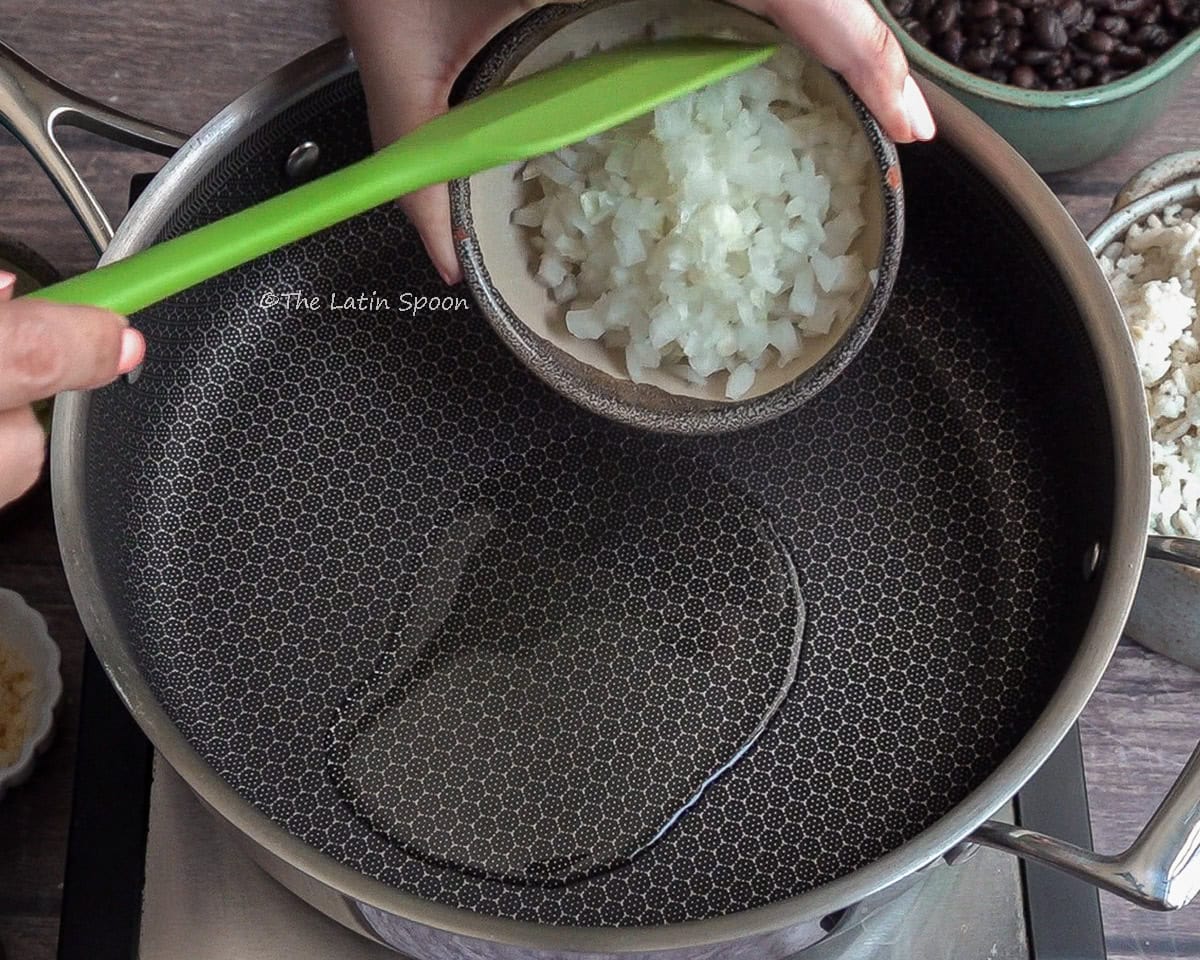
Step 1: Start the sofrito.
In a large pan or skillet over medium heat, add the oil and onions.
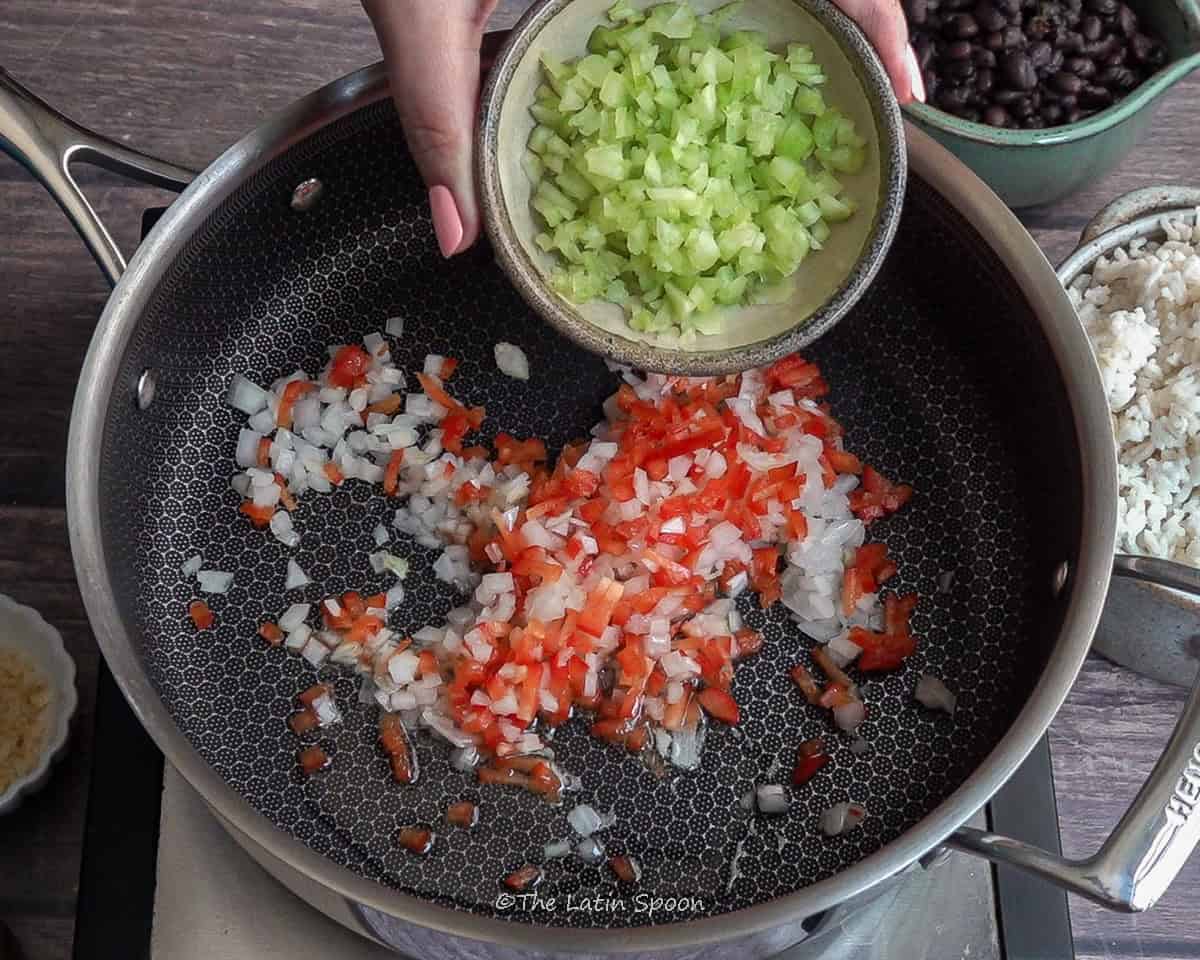
Step 2: Add more veggies.
Add the red bell peppers and celery. Stir and cook 3–5 minutes until softened..
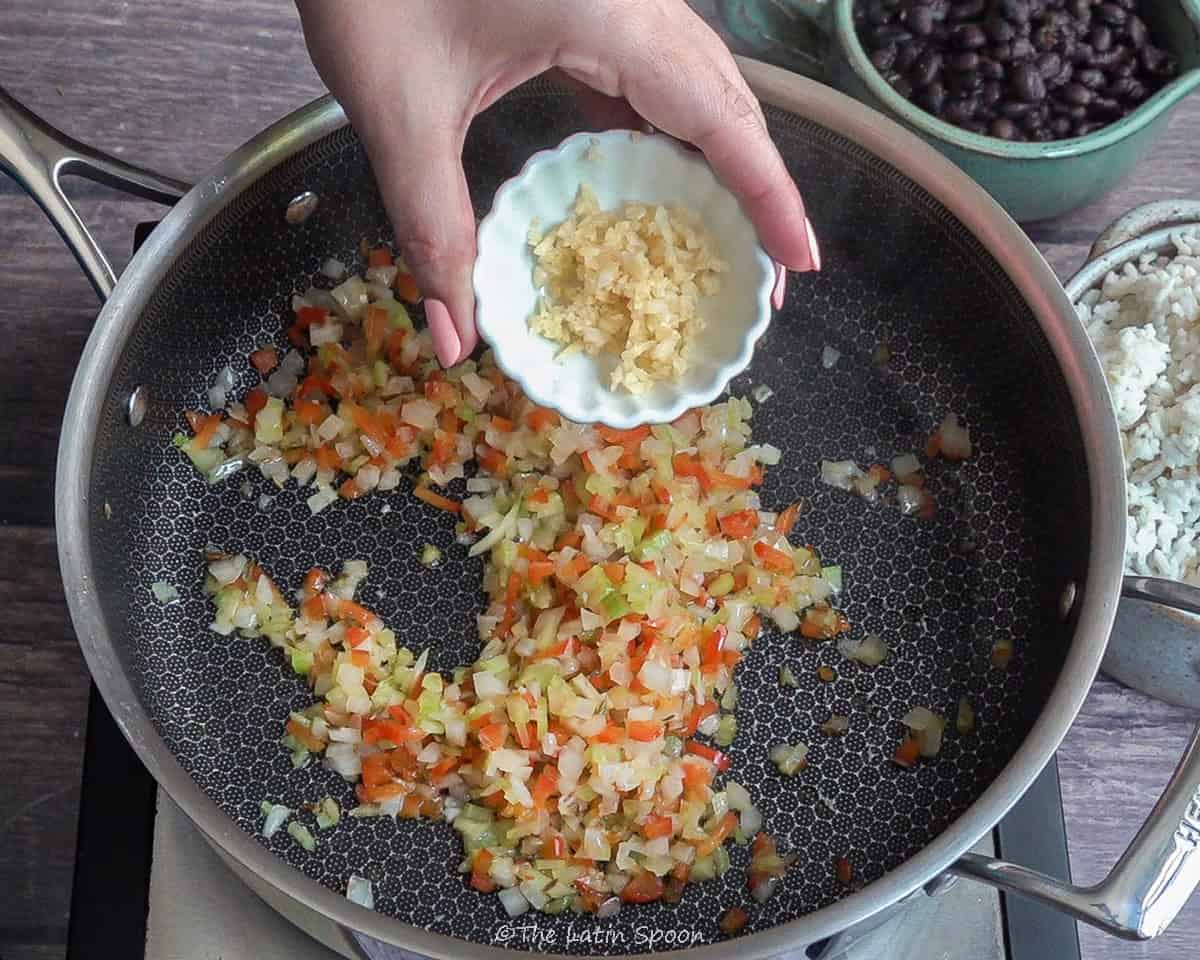
Step 3: Garlic and spices.
Add finely chopped garlic and cumin seeds. Stir constantly 30–60 seconds until fragrant, don’t let the garlic burn.
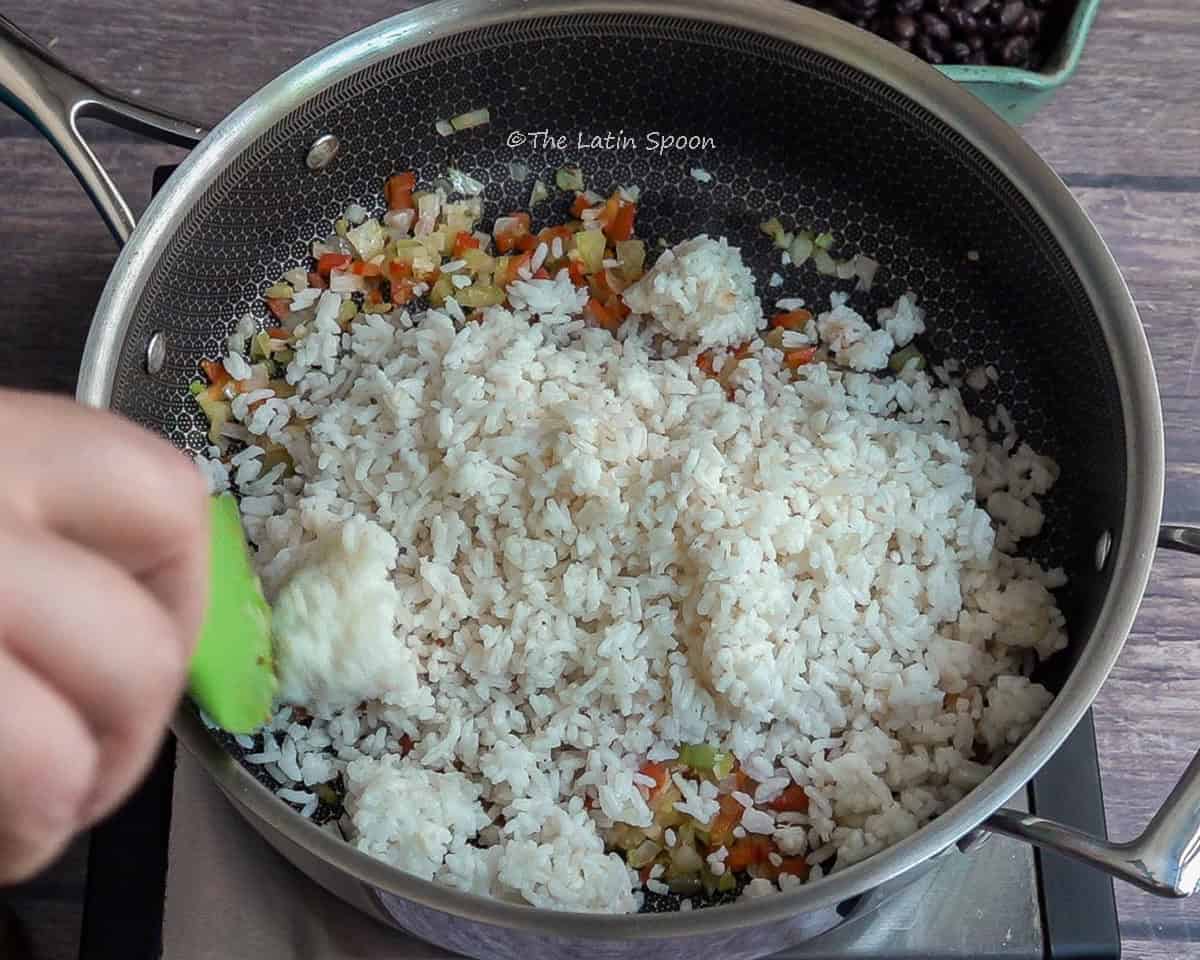
Step 4: Add the rice.
Add your day-old rice (arroz añejo). Break up any clumps with a spatula and toss with the sofrito. Cook 2–3 minutes.
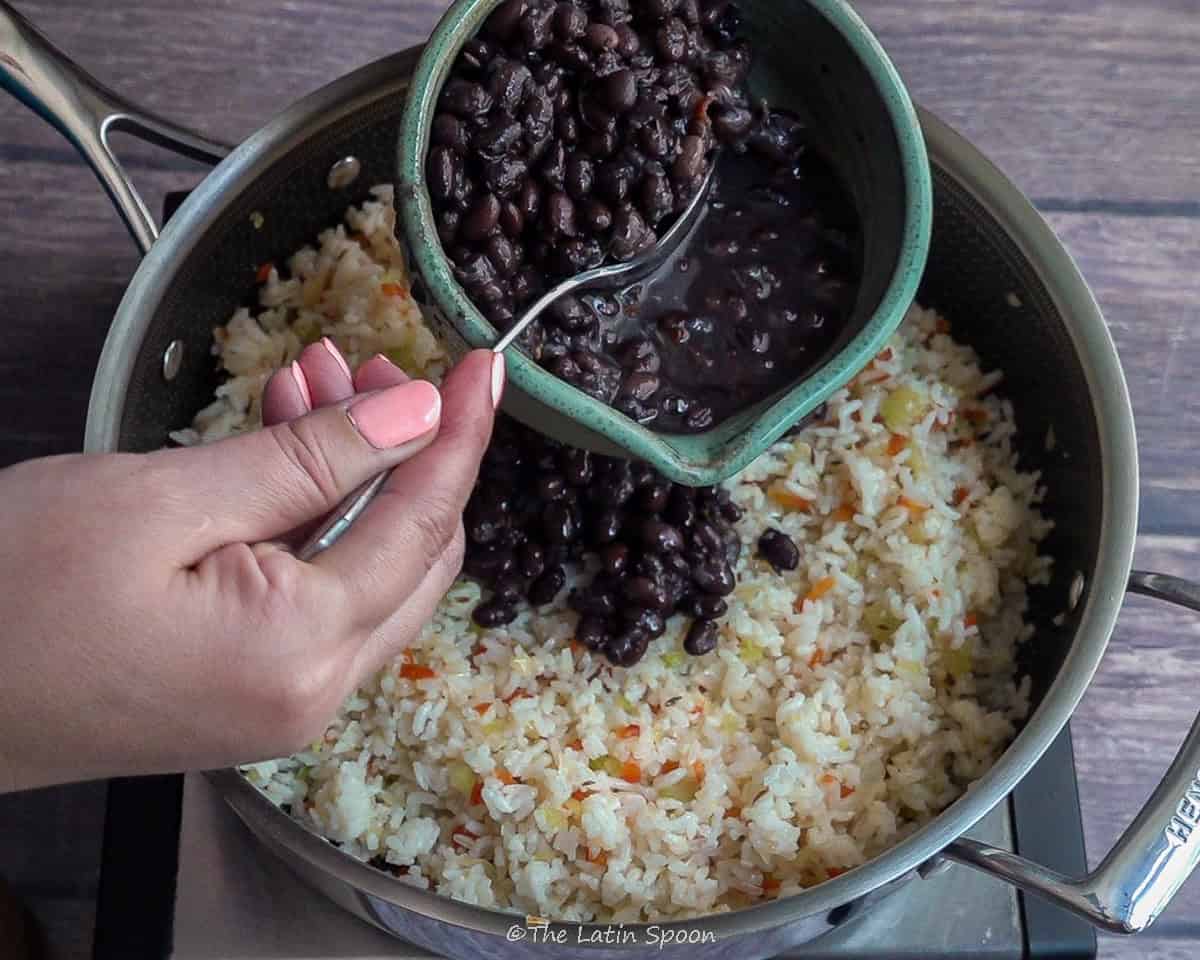
Step 5: Add the beans.
Add the beans (drain if using canned; avoid the broth or liquid). Fold in and adjust the rice-to-beans ratio if needed.
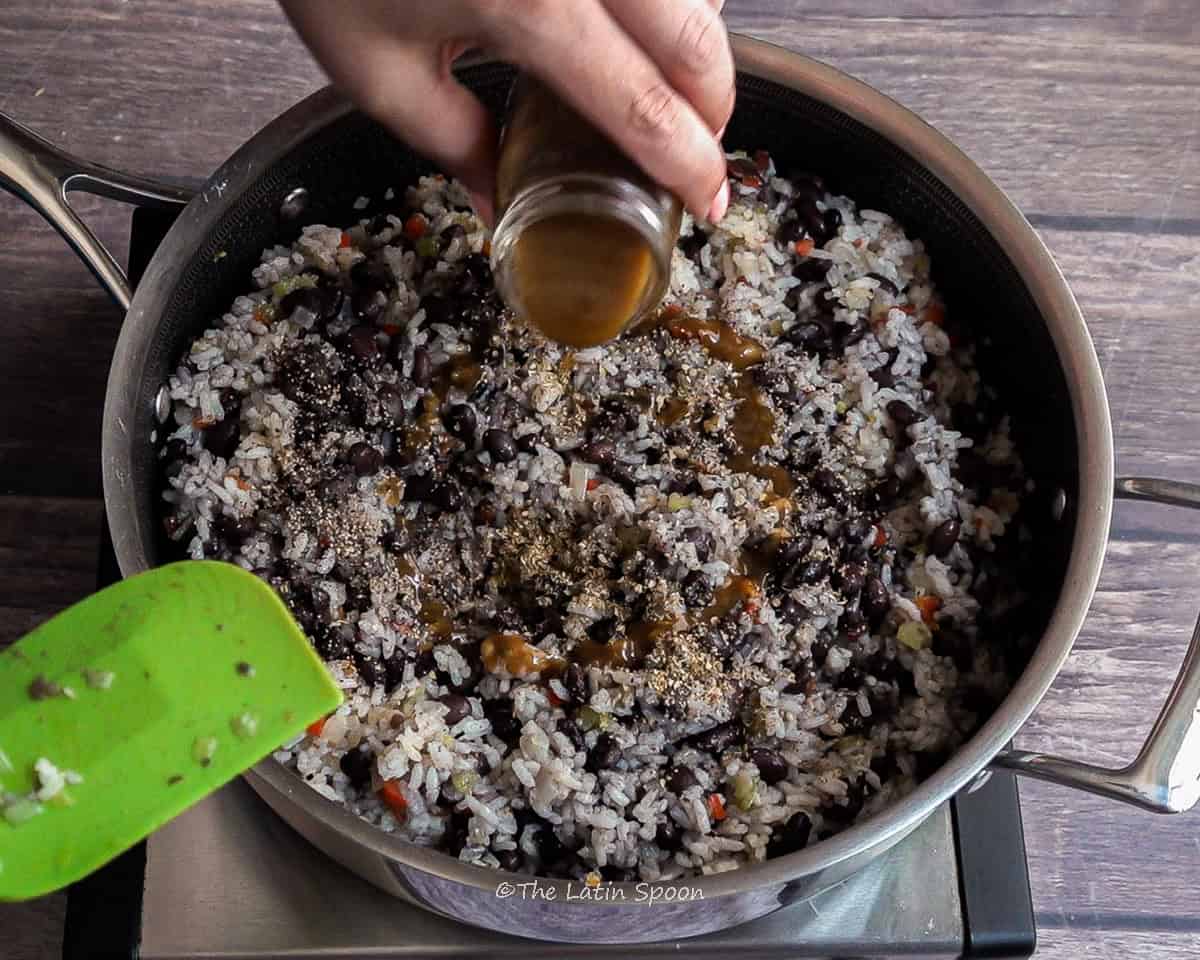
Step 6: Season it.
Add Salsa Lizano (optional), black pepper, dried oregano, and salt to taste. Mix well.
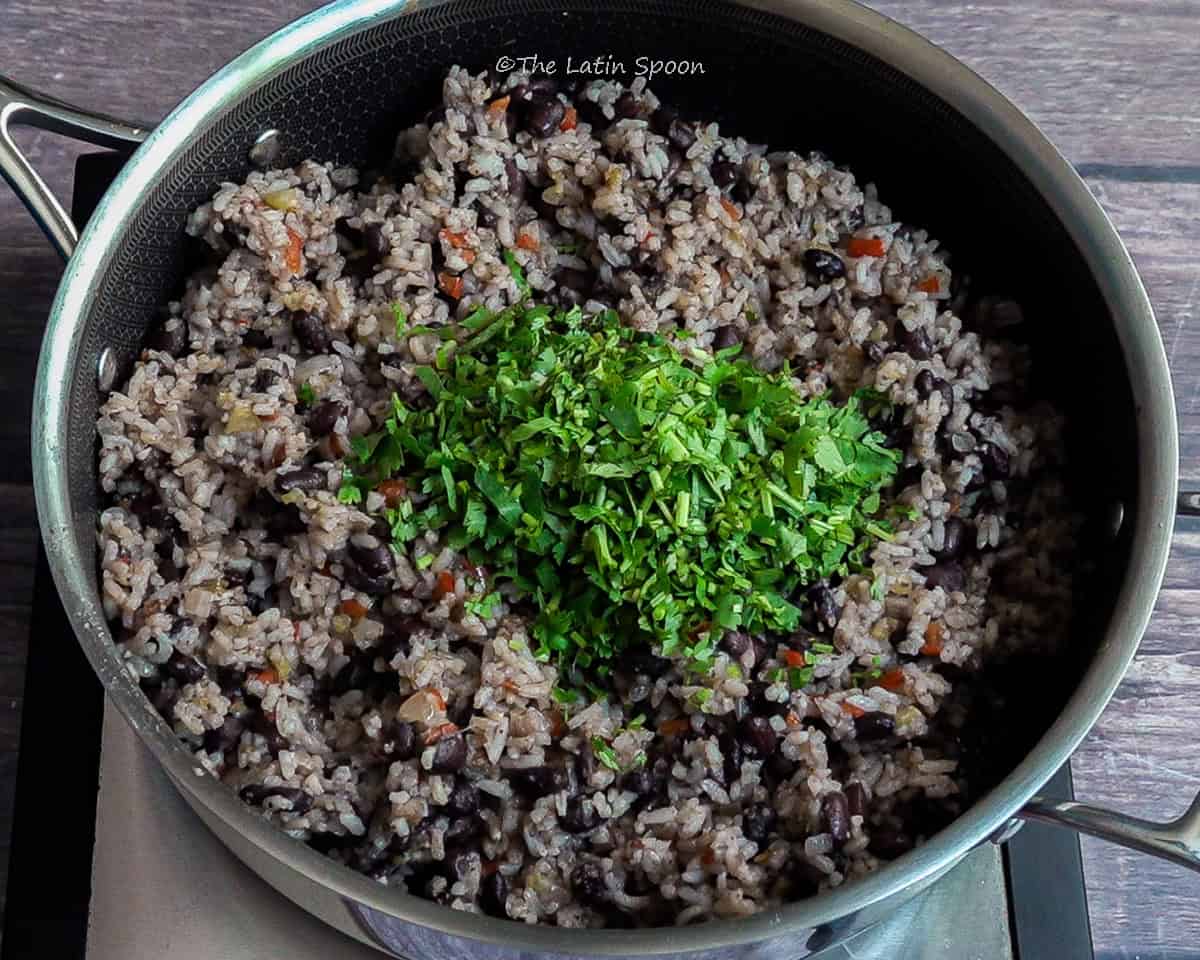
Step 5: Let flavors develop.
Cook 5–7 minutes so the flavors come together. Turn off the heat, then stir in cilantro and culantro.
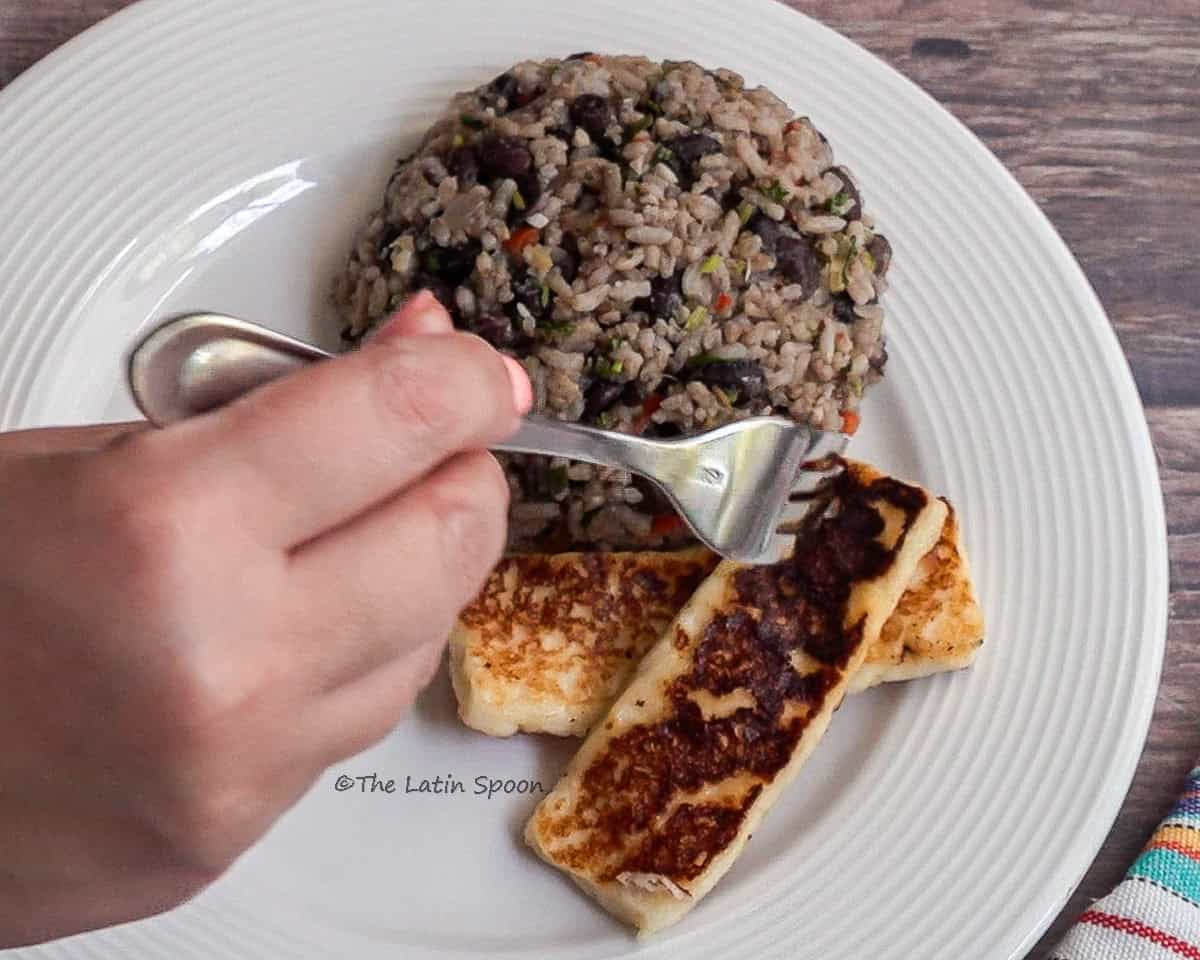
Step 6: Plate and serve.
Serve with fried plantains, fried cheese, and scrambled (or fried) eggs. (Optional: mold the Pinto using a small bowl for a neat dome.)
💡 Your Gallo Pinto Questions, Answered
Yes, you can. Canned beans are delicious too, but they’re usually cooked very plain, so you might have to adjust your seasonings a little bit. If you want to learn how to make beans the Costa Rican way, you can check it out here.
Learn how to make Lizano Sauce from scratch here. And if want to skip the process and get it delivered at your door, get Lizano Sauce here.
Up to 7 days in the fridge if stored properly. But it also freezes really well. Sometimes I make a big batch, freeze part of it right away, and it thaws out beautifully when I need a quick meal.
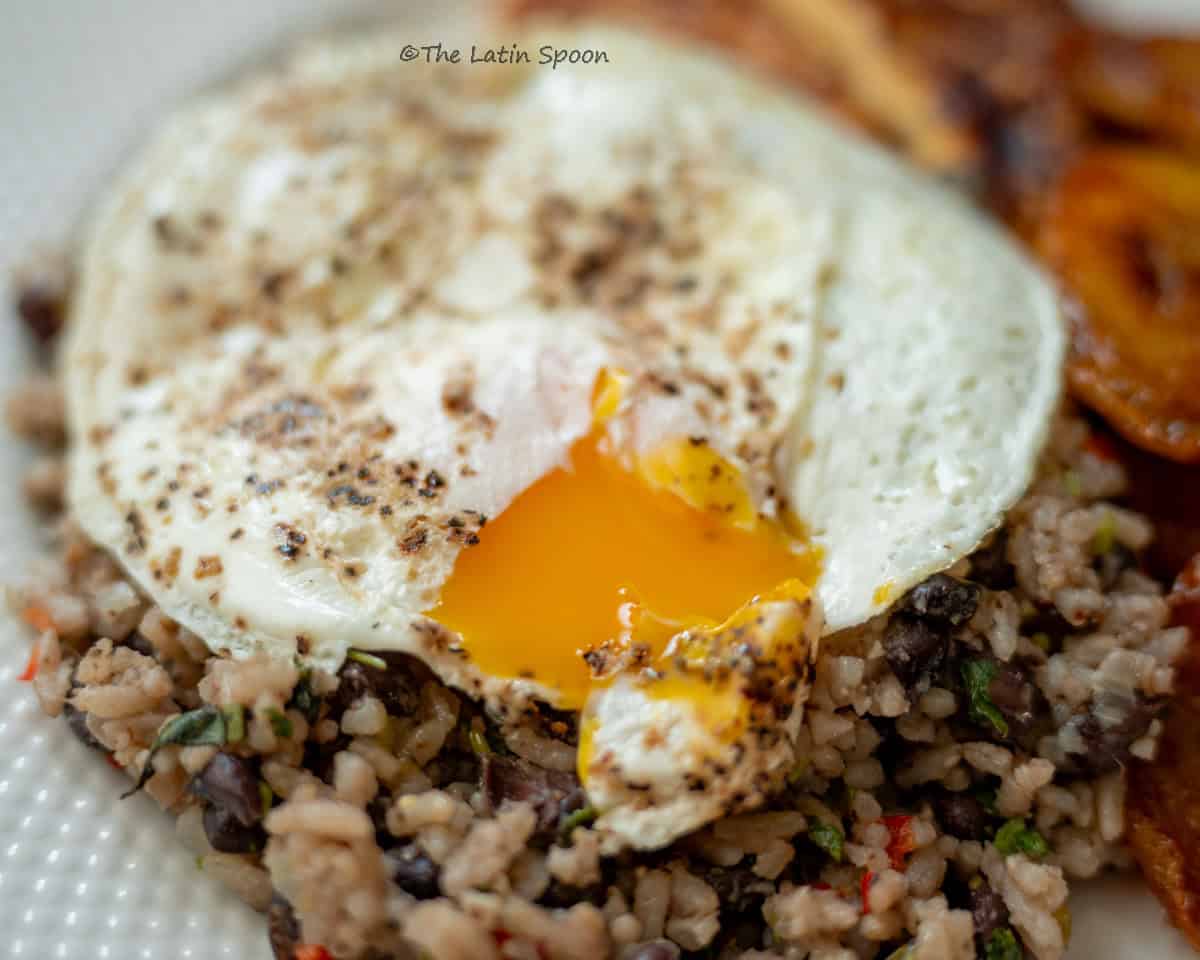
People think Costa Ricans eat Gallo Pinto only for breakfast—but that’s not true! It’s definitely most popular in the morning with fried plantains, cheese, scrambled eggs, natilla (Costa Rican sour cream), plus coffee and some Tropical Fruit Salad on the side. But we also eat Pinto at lunch or dinner. Try it with pollo a la plancha (grilled chicken) and salad, or with carne en salsa (beef stew) and cabbage salad.
Yes, absolutely. Just make sure you’re using oil or vegan butter. Salsa Lizano is also a vegan-friendly sauce, so you can add that too. For sides, go with fried plantains (a must!) and maybe add some steamed cauliflower and carrots. Yum yum!
Why You’ll Love Gallo Pinto
Because it’s more than just rice and beans, it’s comfort food with history. Every bite carries the flavors of Costa Rica.
It’s simple yet full of flavor, it makes the most out of leftovers, and it’s a dish that adapts to you—black beans, red beans, crispy or soft, with or without Lizano.
It’s also incredibly versatile. Gallo Pinto is naturally vegan, and if we want to get a little scientific, rice + beans together make a complete protein. It’s budget-friendly, lasts a long time in the fridge, and freezes beautifully, perfect for meal prep or feeding a crowd.
And above all, it’s a reminder that food connects us.
📌 Related Recipes:
- Learn how to make white rice the Costa Rican way
- Learn how to make black beans the Costa Rican way
- Enjoy this pinto with Yucca Flower Picadillo
💬 Let’s connect!
Let me know in the comments which Costa Rican recipe you’d like me to upload to the blog next. And if you make this Gallo Pinto, send me your pictures or tag me on social media. I love seeing your creations. ¡Pura vida! 🌿
Besitos (kisses),
Mara
Costa Rican Gallo Pinto
Equipment
- Cutting board and knife
- Large pan (or skillet)
Ingredients
- 2 tablespoons oil
- ¼ cup red bell pepper chopped
- ¼ cup onion chopped
- ¼ cup celery chopped
- 2 garlic cloves finely chopped
- ½ teaspoon ground cumin
- 5 cups cooked white rice
- 2 cups fully cooked black beans
- ½ teaspoon dried oregano
- ½ teaspoon black pepper
- 2 tablespoons Salsa Lizano
- Fresh cilantro and culantro to taste
- Salt to taste
Instructions
- In a large pan over medium heat, add the oil, onions, peppers, and celery. Cook for 3–5 minutes, or until the vegetables look translucent and fully cooked. Add the cumin and finely chopped garlic, and cook for another 2–3 minutes—just be careful not to burn the garlic. This mixture is called sofrito, and it’s the base for many Costa Rican dishes.🌱
- Next, add the rice. Since we’re using rice from previous days, it might clump together or form little hard balls. Just break them apart with a spatula and stir constantly into the sofrito. Cook the rice for about 3–5 minutes, or until it starts turning slightly reddish from the bell peppers.🧅
- Add the beans—these can be black, red, or even pinto beans. Make sure you only add the beans and not their broth; otherwise, your Gallo Pinto will turn mushy (unless that’s the texture you’re aiming for). Once the beans are in, stir everything together and check your rice-to-bean ratio. If you feel it needs more rice or beans, adjust it now.🧄
- Start adding the remaining ingredients: black pepper, Salsa Lizano (optional but highly recommended), oregano, and salt. Stir well to combine and let everything cook together for about 5 minutes so the flavors can really develop and make your Gallo Pinto taste amazing.🍚
- Turn off the heat and add the final touch: the fresh herbs. In Costa Rica, we call them both culantro. One is the cilantro you usually find in stores, and the other is culantro ancho, which you can often find in Mexican or Asian markets. Stir them in one last time before plating.🌶️
- To plate your Gallo Pinto the traditional way, grab a small bowl and fill it to the top with the rice and beans. Place the plate you’ll be serving on top of the bowl, flip both upside down, then lift the bowl to release the rice. You’ll have a neat little dome of Gallo Pinto, perfect to pair with fried plantains, fried cheese, scrambled eggs, or anything else you’d like.🌿
Video
Notes
- Make the rice and beans a day or two before making Gallo Pinto. Keep them in an airtight container in the refrigerator until you’re ready to use them.
- Gallo Pinto was created as a way to use up leftover rice and beans. If you don’t have day-old rice and beans, make sure to let them cool off completely before mixing them together. Otherwise, the texture will be different.
- The flavor of Gallo Pinto starts with the rice and beans. For this recipe, I’m using leftover Costa Rican-style white rice and well-seasoned Costa Rican-style black beans. If you use plain rice or beans, you may need to adjust the seasoning.
- You can prepare the sofrito ahead of time to reduce cooking time.
- If you don’t have Salsa Lizano, just add a bit more of the other spices like oregano, black pepper, and cumin.
- Feel free to add a touch of chile picante (hot peppers like cayenne, chipotle, or any other type). This is your Pinto—make it the way you like it!

Anye says
I followed the recipe with no mods first and while it's fine as a nondescript side dish it's got nowhere near the flavor intensity of what I've had in Costa Rica. Then I ended up adding more and more Salsa Lizano in trying to get to that level of flavor and it still just wasn't there. Maybe if I'd poured half the bottle in I might have gotten there. The color isn't as rich either as what you see either in this picture or what I'm used to seeing, it's just slightly reddish in color, not the all over brown you see in the picture. Maybe the Salsa Lizano they sell in the US is inferior, I'm not sure.
Mara says
Hello Anye! First of all, thank you so much for trusting my recipe. I’m sorry it didn’t turn out to be exactly what you were expecting.
I’d like to suggest a couple of things that may help you get closer to the Gallo Pinto I grew up with in Costa Rica. For this recipe, I use rice and beans that have already been cooked and seasoned the Costa Rican way. I actually cook both the rice and the beans the day before, using plenty of vegetables, sofrito, herbs, and seasonings. All of that flavor carries over into the final Gallo Pinto, so the flavor of the rice and beans themselves makes a big difference. Both recipes are also available at the blog.
Also, the type of beans you use can make a difference. Not all beans are the same, and different varieties can vary in flavor, texture, and color. For example, a small red bean, a pinto bean, and a kidney bean can each have their own characteristics.
And you actually inspired me to do something else: I’m going to create a version using canned beans and ready-made white rice from the store as the starting point. I’m not assuming those are what you used, but I think it would be helpful to include that option on the blog because those little details can definitely make a difference in the final result.
Thank you again for taking the time to leave such detailed feedback! Mara