
When I think about this easy 3-2-1 empanada dough, I think about my aunt Yadi. She taught me how to make it when I was 12 years old, around the time I first started baking and discovered how much I enjoyed being in the kitchen.
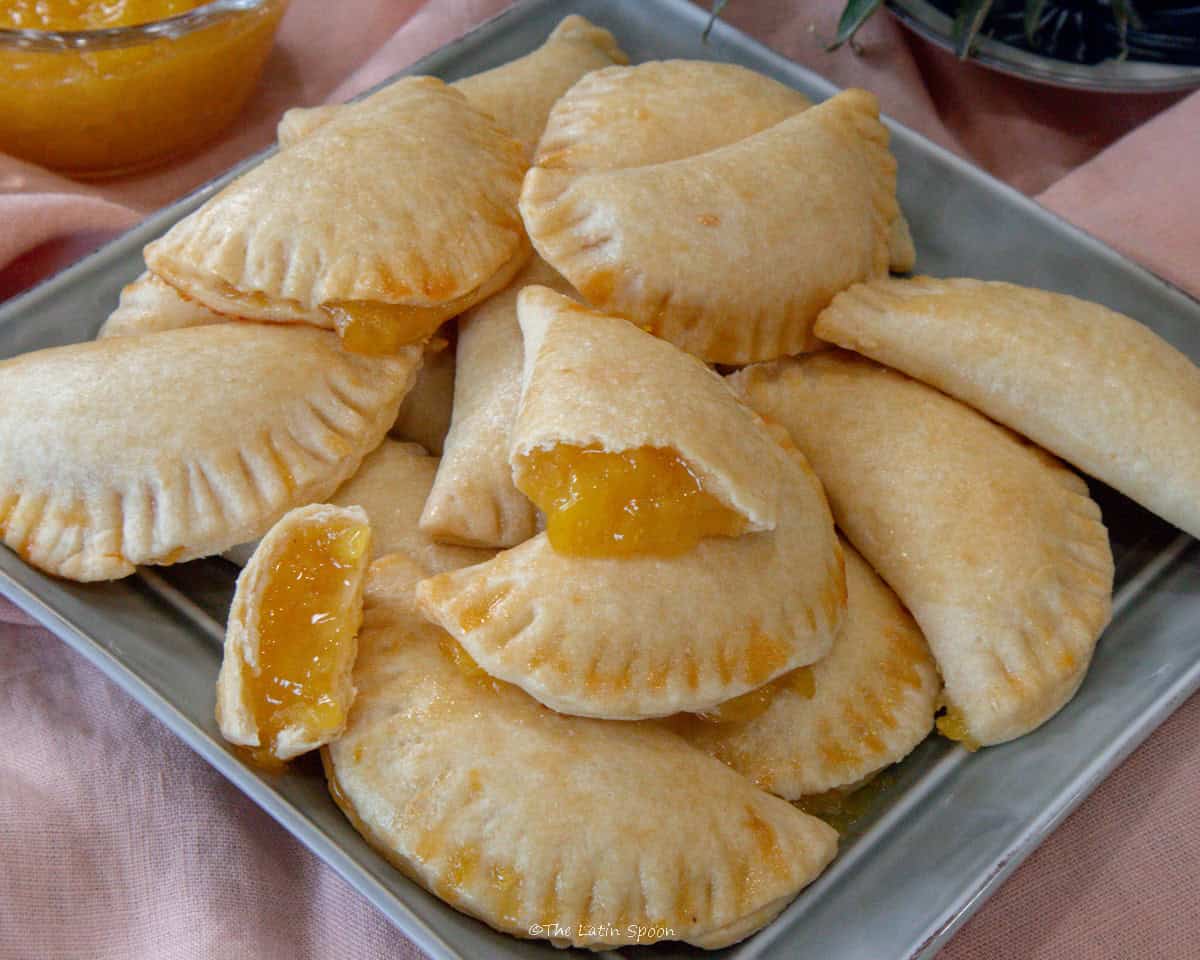
She explained the recipe to me as 3,2,1: three parts flour, two parts fat, and one part liquid. It was one of the first recipes I learned to make, and the simplicity of it stuck with me. You don’t need to memorize a long list of ingredients or complicated steps. You just remember 3-2-1.
Learn how to make Pineapple filling to stuff your empanadas with.
After my aunt passed away, this became one of the recipes that made me feel closest to her. It was one of her favorites because it was so practical and because it made empanadas with that slightly crisp, toasted texture she loved.
I still love how easy this dough is to work with. It can be used for both sweet and savory empanadas, and once you learn the basic 3-2-1 ratio, it is one of those recipes you can make almost from memory.
Watch Video In Spanish Here
This is one of the most popular recipes on my Spanish-speaking channel, with nearly 6 million views. I don’t have an English video for this recipe yet, but if you’d like to see what the dough should look like as you make it, you can watch the Spanish version below.
If you prefer to follow the recipe here, the step-by-step photos in this post will guide you through the process and help you get the same results.
What You’ll Need
For this dough, you do not need anything complicated. It uses just three simple ingredients. But simple does not mean you can skip the details.
🥣 Flour
I use all-purpose flour, which is the most common flour to have in the kitchen. It is not bread flour, which has more gluten, and it is not self-rising flour, which already contains baking powder.
All-purpose flour works perfectly here because it gives us a soft dough that is easy to handle and does not puff up too much, which makes it ideal for empanadas.
🟡 Want to make them gluten-free?
You can use a gluten-free flour blend that says “1:1” or “cup for cup” on the package. This means you can replace the regular flour with the same amount of gluten-free flour without adjusting anything else.
In my experience, when I have made them with this type of flour, the dough is a little more delicate to handle. Since it does not have gluten, it can crack more easily, so I suggest working slowly and with patience. It also helps to refrigerate the dough for a little while before rolling it out.
🧈 Butter
I use traditional unsalted butter made from cow’s milk. I like it because it gives the dough a richer flavor and a more delicate texture after baking.
🟡 Can I substitute the butter?
Yes. I use unsalted butter for this recipe, but you can substitute it with vegetable margarine or lard if you prefer or that is what you have on hand.
Keep in mind that the texture and flavor may vary slightly. Butter gives the empanadas a rich flavor and a crisp, crumbly texture, while margarine tends to make them a little softer. Lard also works well and gives the dough a slightly different flavor and texture.
🥛 Evaporated Milk
For this recipe, I use evaporated milk. It gives the dough a soft texture, a slightly creamy touch, and helps create empanadas that are lightly crisp on the outside and soft on the inside.
It is also a practical ingredient and easy to find, especially if you want empanadas with a dough that already tastes rich without needing complicated ingredients.
🟡 What can I substitute it with?
Yes, you can substitute the evaporated milk with other options you may already have at home. Just keep in mind that the result will change a little:
Heavy cream: The dough will be richer, more buttery, and more crumbly.
Regular milk: The flavor will be more neutral and the texture a little softer.
Water: This is the simplest option, but the dough will be firmer and less delicate.
🧂 What about salt or sugar?
If you are using unsalted butter, I recommend adding ½ teaspoon of salt to the dough so it does not taste bland. If you are using a sweet filling and would like to add sugar to your dough I suggest you add 2 tablespoons of sugar.
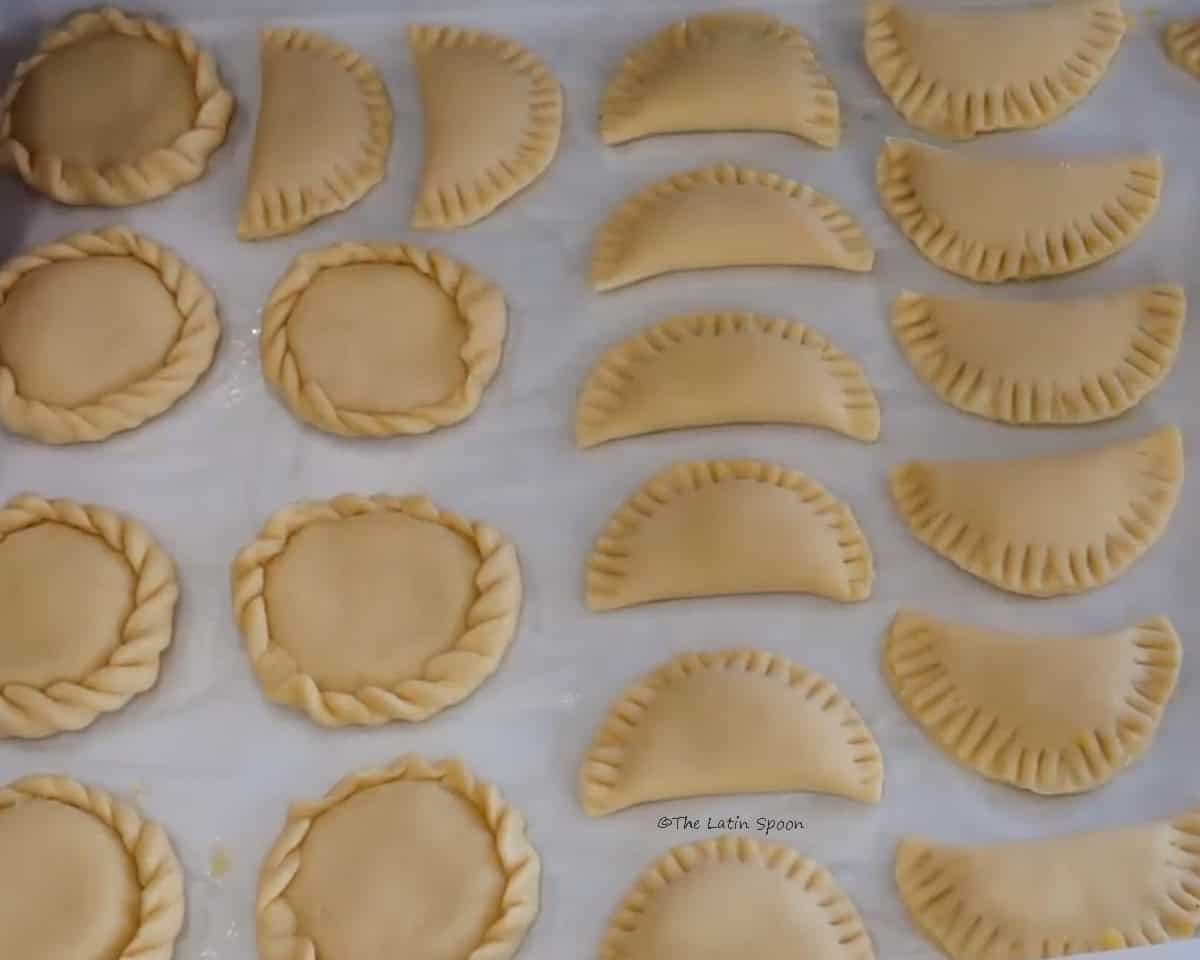
✨ More Tips for the Best Empanada Dough
- Use room-temperature butter so it mixes better with the flour and gives you a smoother, more even dough.
- Do not skip the resting time. This allows the gluten to relax and helps prevent the dough from shrinking when you shape or bake the empanadas.
- Roll the dough gently, always from the center toward the edges. This helps prevent tearing and keeps the dough at an even thickness.
- When cutting the circles, place each cut as close to the next one as possible so you can make the most of the dough and reduce waste.
- If you reuse the leftover dough, knead the scraps together and add a few drops of water if needed, especially if you used extra flour while rolling. Let it rest for 30 more minutes before using it again.
- Use a little water around the edge of each dough circle before closing the empanadas. This helps seal them better and prevents the filling from leaking while baking.
- Refrigerate the empanadas for 10 to 15 minutes before baking, while the oven preheats. This way, they go cold into a hot oven and the texture turns out better.
- Brush the empanadas with egg wash before baking to give them a beautiful golden color and a shiny finish.
How to Make 3-2-1 Empanada Dough
I will show you the step-by-step process with photos so you can prepare a homemade empanada dough that is easy to work with, soft, and delicious.
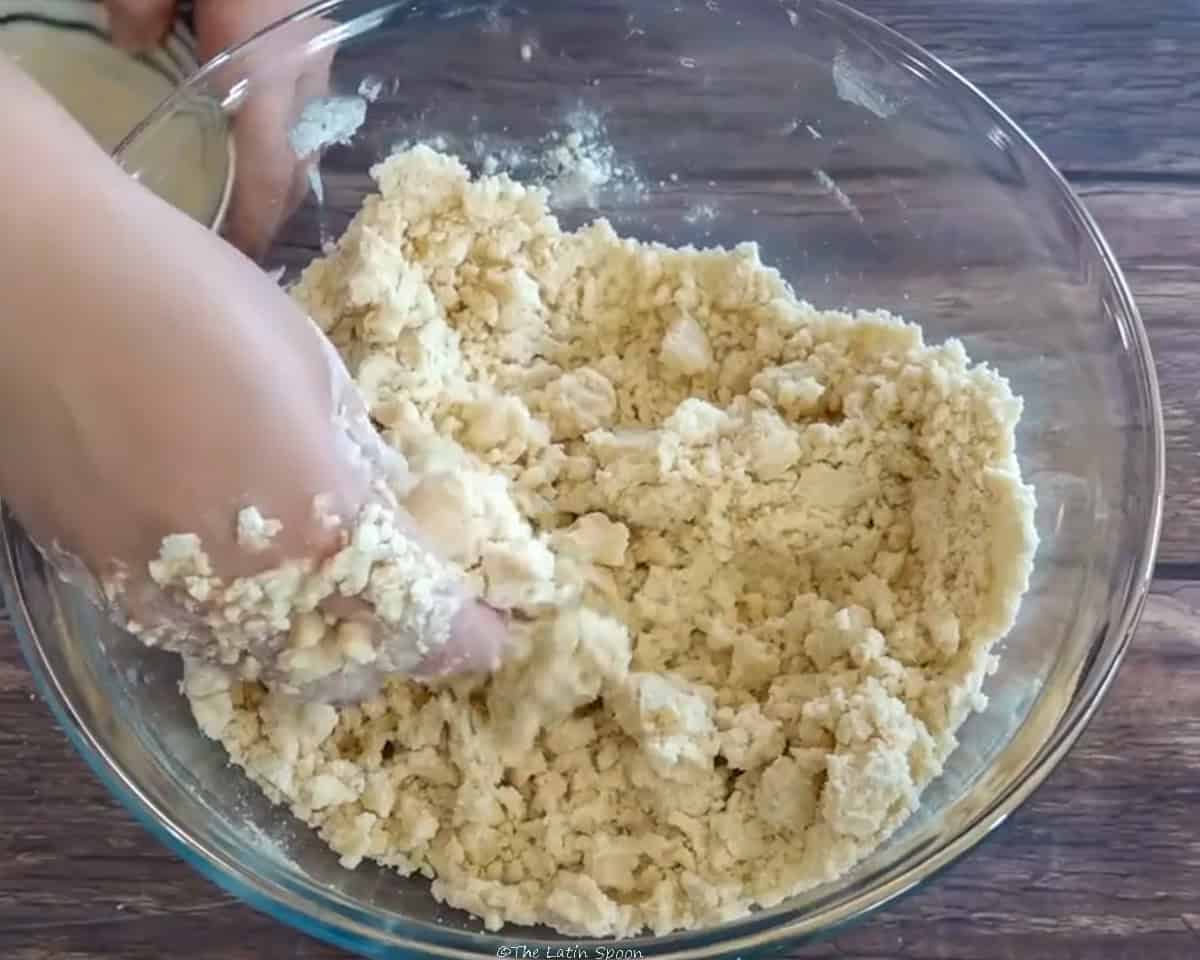
Step 1: Mix the dry ingredients with the butter
In a large bowl, add the flour, butter, and sugar or salt, if using. Mix until you get a sandy texture.
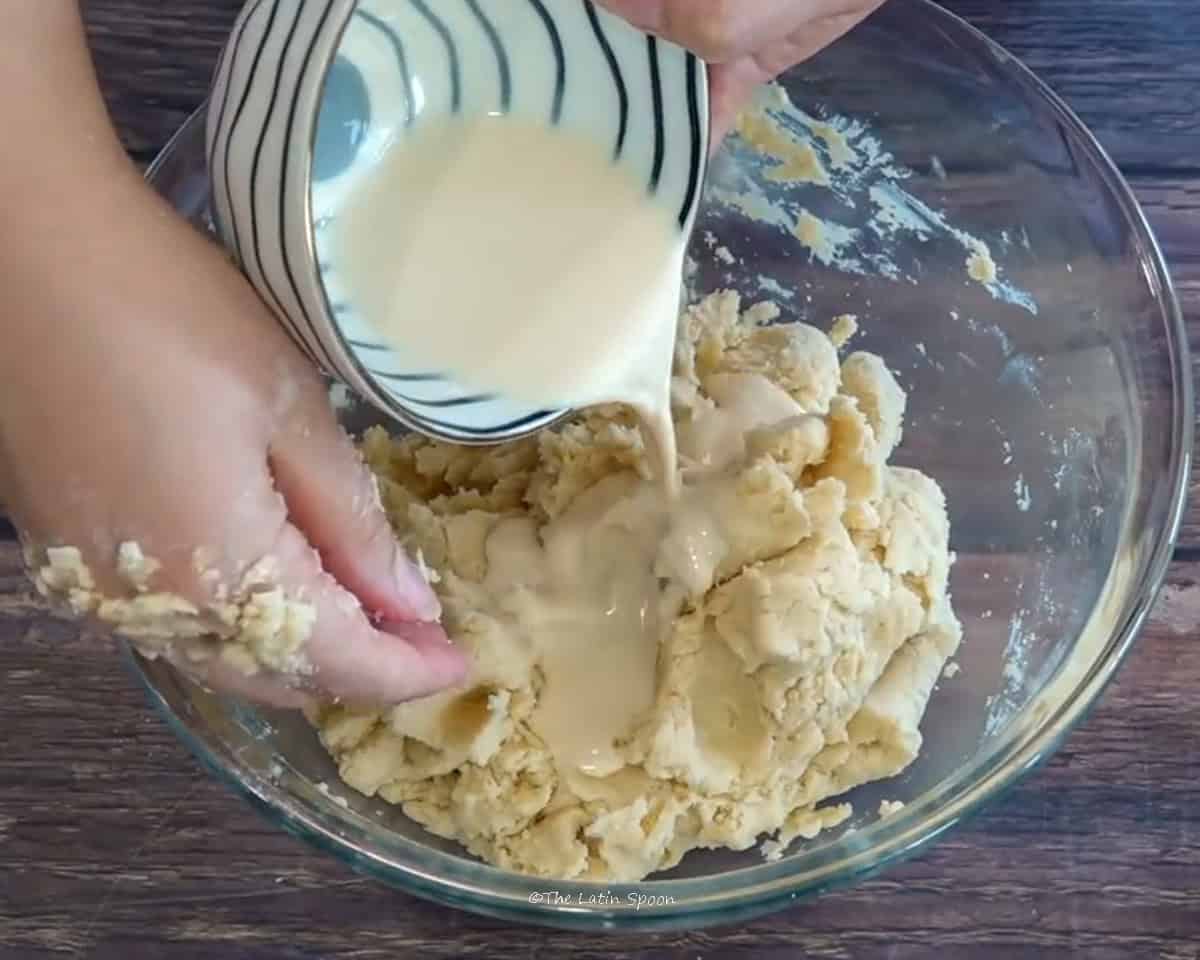
Step 2: Add the evaporated milk
Pour in the evaporated milk little by little while mixing, so you can see how much more you need to add until the dough comes together.
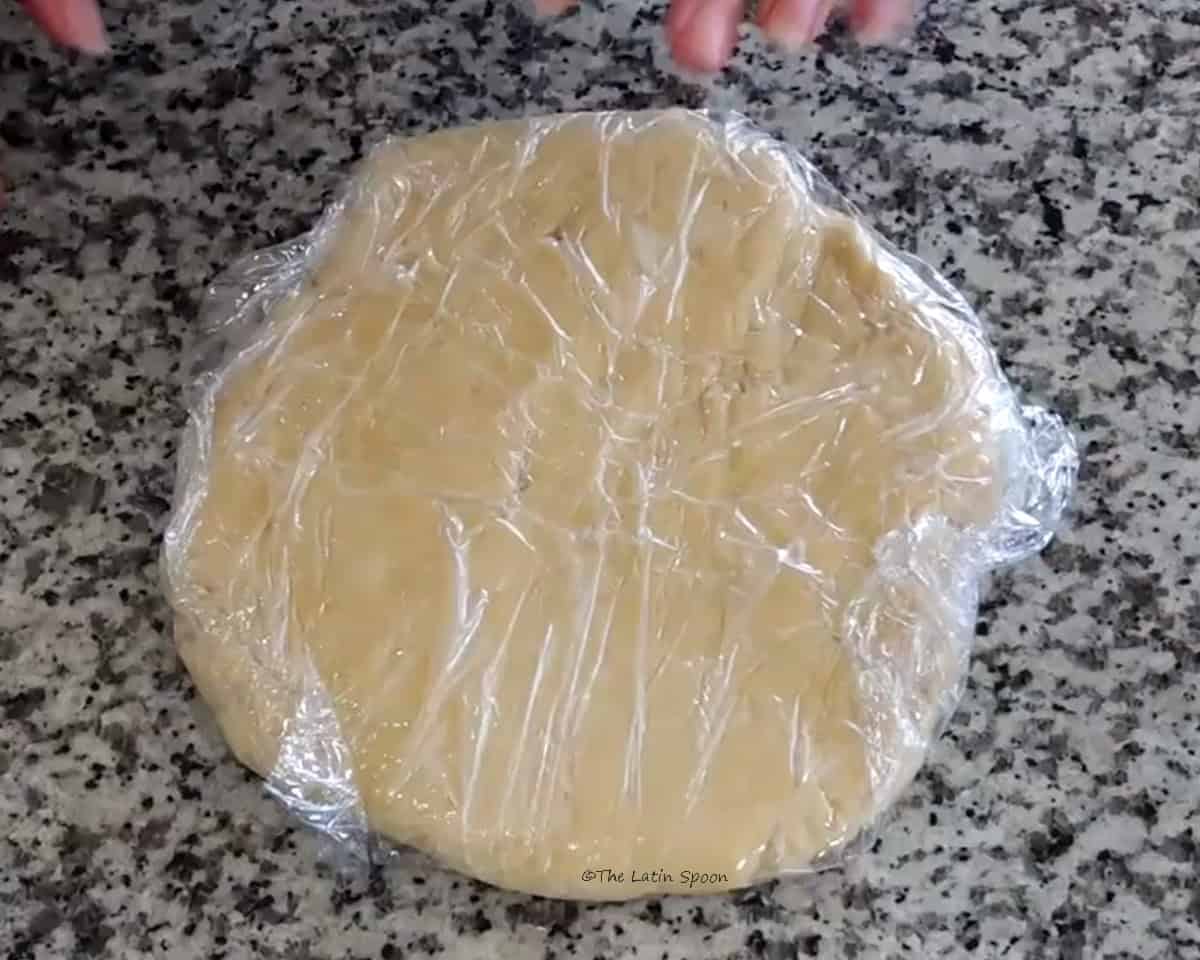
Step 3: Refrigerate the dough
Wrap the dough in plastic wrap and place it in the refrigerator for 30 minutes. In the meantime, you can prepare the filling you are going to use.
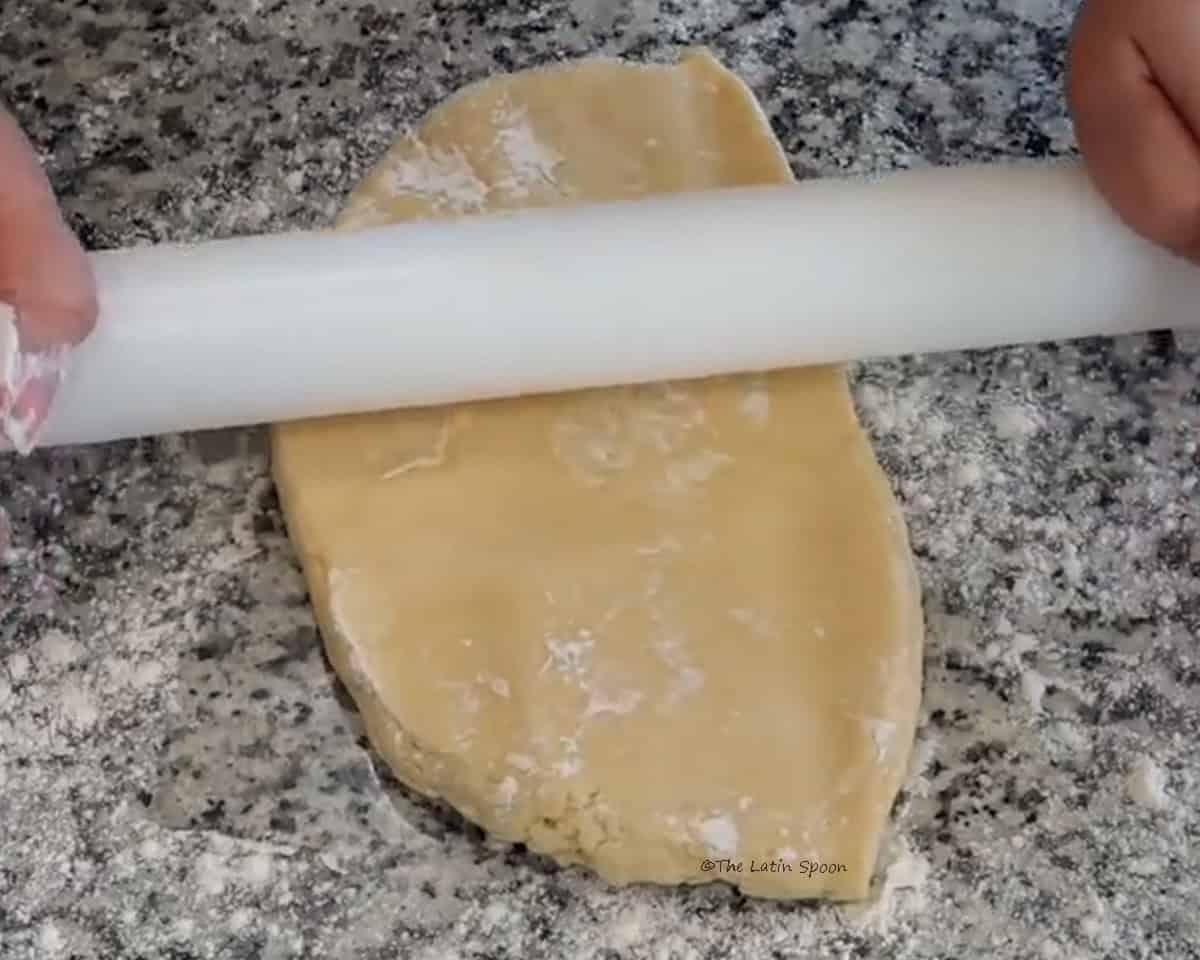
Step 4: Roll out the dough
Remove the dough from the refrigerator, sprinkle some flour over a flat surface, and start rolling it out with a rolling pin. Make sure to roll it to the desired thickness.
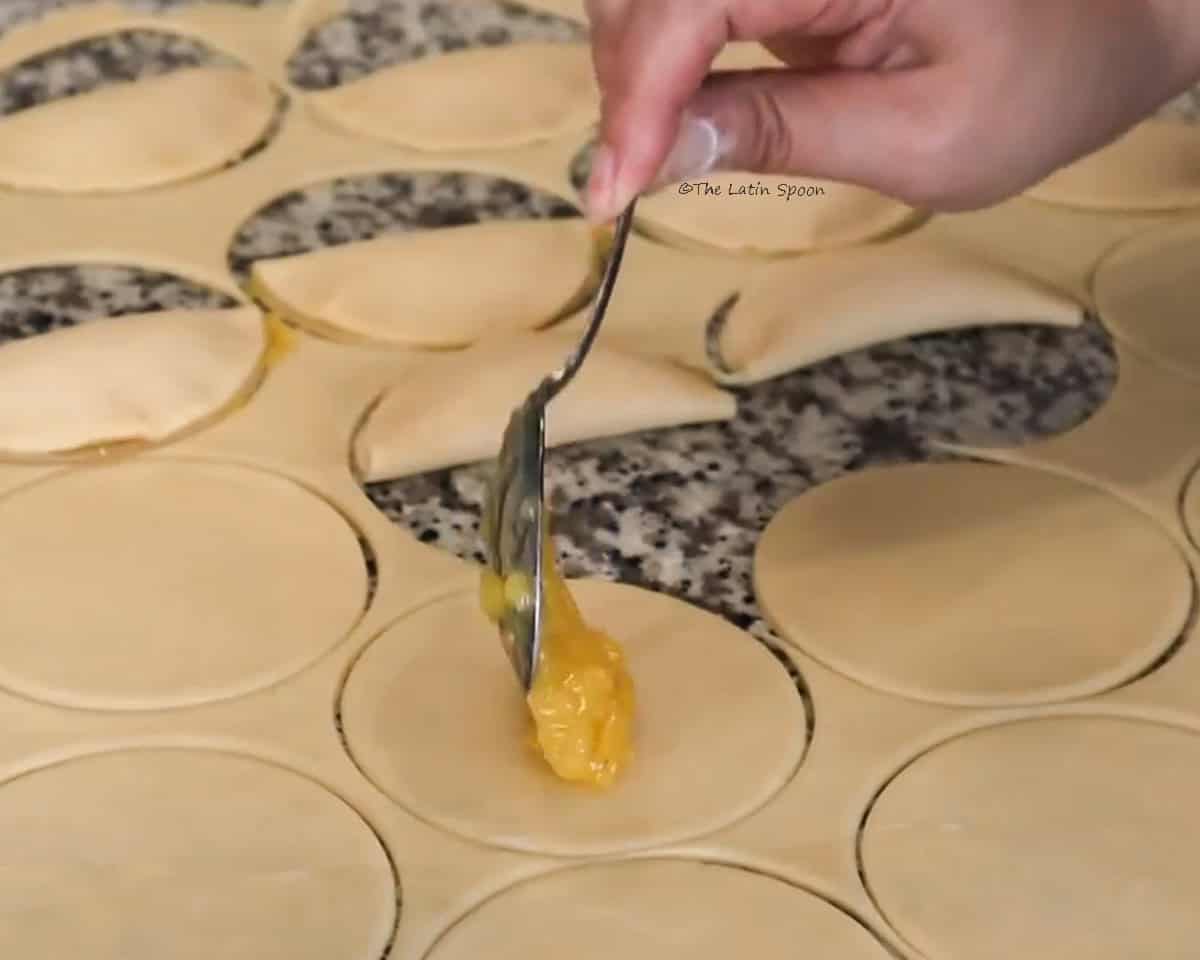
Step 5: Fill the dough
Place the filling on one half of each dough circle. Make sure not to add too much filling so you can close the empanadas without trouble.
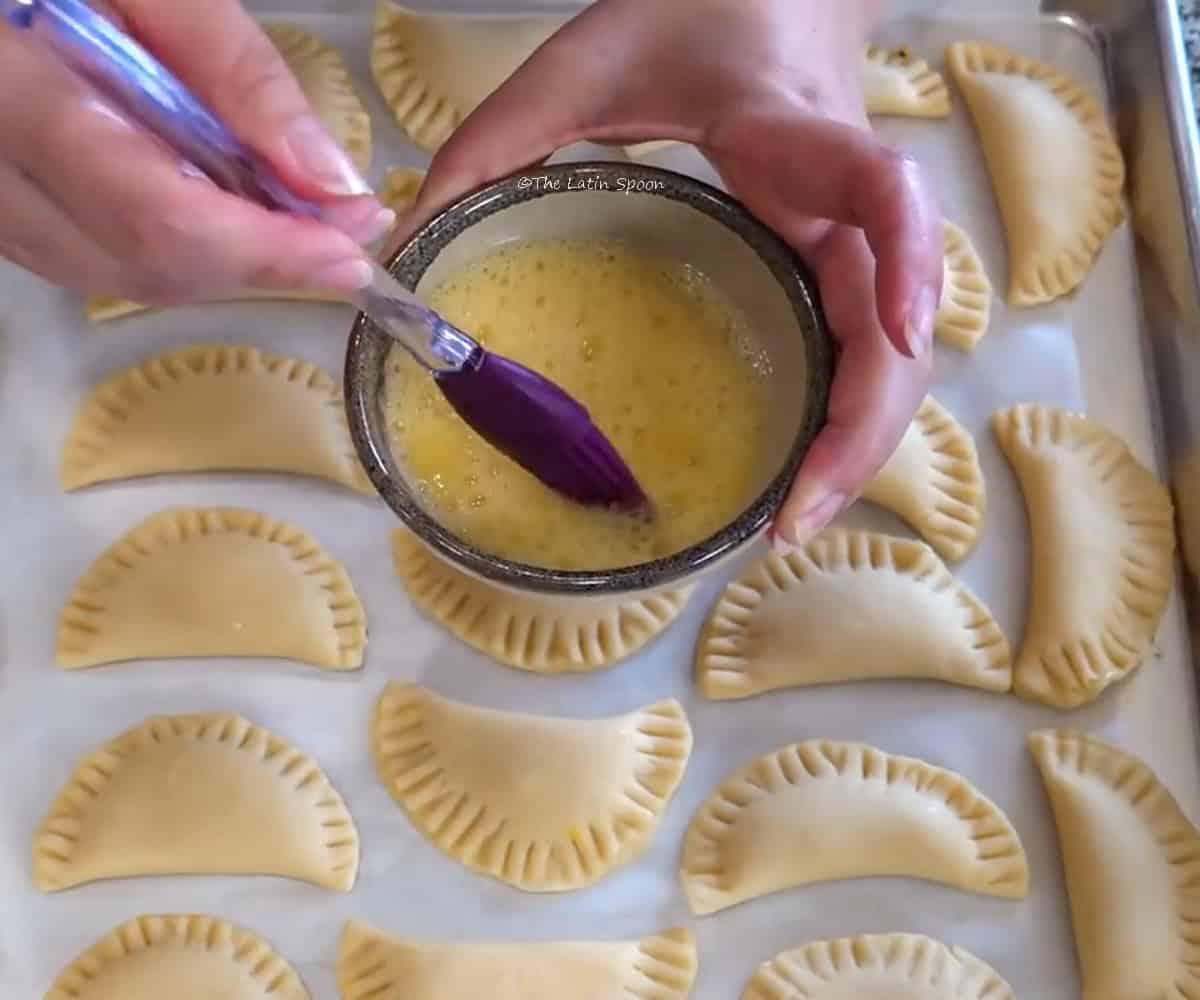
Step 6: Refrigerate, brush, and bake
Place the empanadas in the refrigerator for 10 to 15 minutes. Then brush the tops with beaten egg and bake in a preheated oven at 350°F until golden brown.
💡Frequently Asked Questions
This can vary depending on how you measure your flour, especially how tightly you pack it into the measuring cup. If your dough feels too wet or sticky, gradually add a little more flour until it reaches the right consistency. Do not add more than 1 additional cup of flour.
Yes. You can refrigerate the dough from one day to the next, and it can actually improve after resting. Just remember to take it out a few minutes before using it so it softens a little.
You can also freeze it, either as a dough disk or with the empanadas already assembled. Wrap it well so it does not dry out or absorb odors from the freezer.
For sweet empanadas, this dough works very well with pineapple filling, guava, dulce de leche, or cooked apples with cinnamon.
For savory empanadas, you can use shredded chicken, shredded beef, potato picadillo, or vegetable fillings. The important thing is to avoid fillings that are too runny, so the dough does not get soggy and can keep its crisp, firm texture.
This dough does not need much kneading. Mix it only until all the ingredients come together and the dough feels soft but not sticky. If you overwork it, the dough can become tough or elastic, and that will change the final texture. With this dough, less is more.
If the dough shrinks, it may be because it was kneaded too much and the gluten became too active. It can also happen if the dough did not rest long enough, especially if it was warm, or if it was rolled too thin or handled too much. To avoid this, work the dough only as much as needed, let it rest in the refrigerator for at least 30 minutes, and roll it gently without forcing it. This will help it keep its shape and texture when baked.
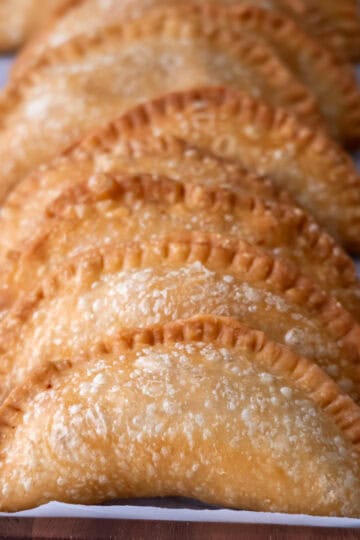
I do not recommend this dough for fried empanadas, because it was created for baking. I am working on bringing my fried empanada dough recipe to the blog soon, with a clear step-by-step process.
I recommend rolling the dough to about 2 to 3 millimeters thick, similar to a thin coin. If the dough is too thick, the empanadas may take longer to bake and taste more like dough than filling. If it is too thin, it may tear while shaping or baking.
🥟 A Dough Worth Keeping
I think every Latin kitchen needs a good empanada dough, and this 3-2-1 version is one of my favorites. It is simple, easy to remember, and gives you a crisp, lightly toasted dough that lets the filling be the star.
You can use it for both sweet and savory empanadas, and you can even adjust the dough with a little salt or sugar depending on the filling. But honestly, I often leave it plain because I love how it tastes on its own and how well it complements whatever you put inside.
We love empanadas around here, so I’ll be sharing more versions with you. If you want to try a savory filling, check out my Chicken Empanadas Arregladas, and keep an eye out for my upcoming Heart of Palm Empanadas and Potato and Chorizo Empanadas. And if you have a sweet tooth, my Pineapple Filling is a great place to start.
Once you learn this 3-2-1 dough, you have a simple base you can come back to again and again, whether you are craving something sweet or savory.
Besitos 🥰
Mara
3-2-1 Dough for Baked Empanadas
Equipment
- Baking sheets
- 1 Rolling Pin
- measuring cups
- Round cutter
- Parchment paper
Ingredients
- 3 cups all-purpose flour 480 grams
- 2 sticks sticks of unsalted butter 226 grams
- 1 cup evaporated milk or water 150ml
- 1 egg for baking
Instructions
- In a large bowl, add the all-purpose flour, butter, and sugar or salt, if using. Mix with your hands until the mixture has a sandy texture.
- Add the evaporated milk little by little while mixing. Continue adding until the dough comes together and feels soft, but not sticky.
- Wrap the dough in plastic wrap and refrigerate it for 30 minutes. While the dough rests, prepare the filling you are going to use.
- Remove the dough from the refrigerator and sprinkle a little flour over a flat surface. Roll out the dough with a rolling pin until it reaches the desired thickness, about 2 to 3 millimeters.
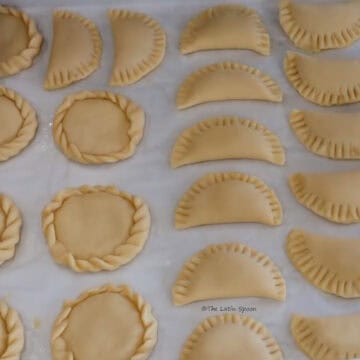
- Cut the dough into circles using a round cutter. Place the filling on one half of each circle, making sure not to overfill them.
- Brush or place a little water around the edge of each dough circle, then fold and close the empanadas. Press the edges well to seal.
- Place the empanadas on a baking sheet lined with parchment paper and refrigerate them for 10 to 15 minutes while the oven preheats.
- Brush the tops with beaten egg and bake in a preheated oven at 350°F (175°C) until golden brown. The baking time will vary depending on the filling, so use the color of the empanadas as your guide. Usually from 30-40 minutes.
Notes
- If you are making savory empanadas, you can add 1 teaspoon of salt to the dough to enhance the flavor.
- If you prefer sweet empanadas, you can add 2 tablespoons of sugar to the dough for a softer, slightly sweeter taste.
- If you use salted butter, you do not need to add extra salt to the dough.
- You can substitute the heavy cream with regular milk or even water, depending on your preference or what you have at home.
- The bigger the circle, the bigger the empanada. Start with a 5-6 inches in diameter.

Leave a Reply