
Rice is one of the most important foods in Costa Rican cuisine. We serve it with beans, picadillos, meat, vegetables, and just about anything else you can imagine. This recipe will show you how I prepare classic Costa Rican white rice with light, fluffy, and perfectly separated grains.
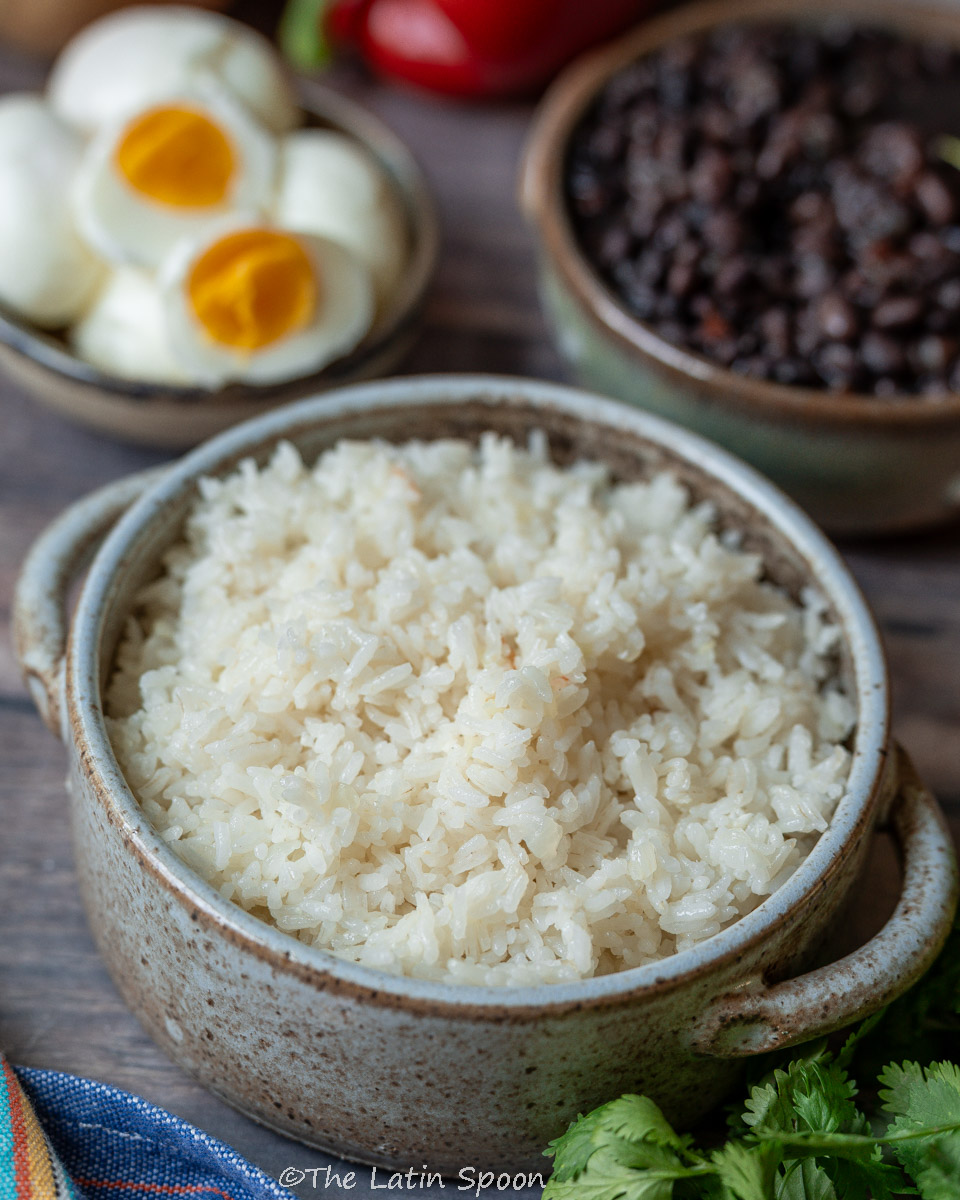
Growing up in Costa Rica, I never needed a written recipe to make rice. I learned by watching my mom, my aunts, and many other incredible women in my family. No one measured everything precisely or followed a list of instructions. They simply knew how much water to add, when to lower the heat, and how the rice should look at each stage.
For me, making rice became something I did almost by instinct. That changed when I decided to teach the recipe and realized I had to explain every measurement and every step clearly. It took me four attempts to turn something I had always made by feel into a recipe that anyone could follow.
🎥Watch Video Here
During that process, I also discovered why the familiar 2:1 water-to-rice ratio does not work equally well for every type of rice. The variety of rice, the pan, the cooking temperature, and even whether the rice has been rinsed can affect how much liquid it needs.
This recipe focuses on the traditional white rice we eat most often in Costa Rica. Brown rice is available, but it is not nearly as common on our everyday tables.
Ingredients for White Rice-Costa Rican style
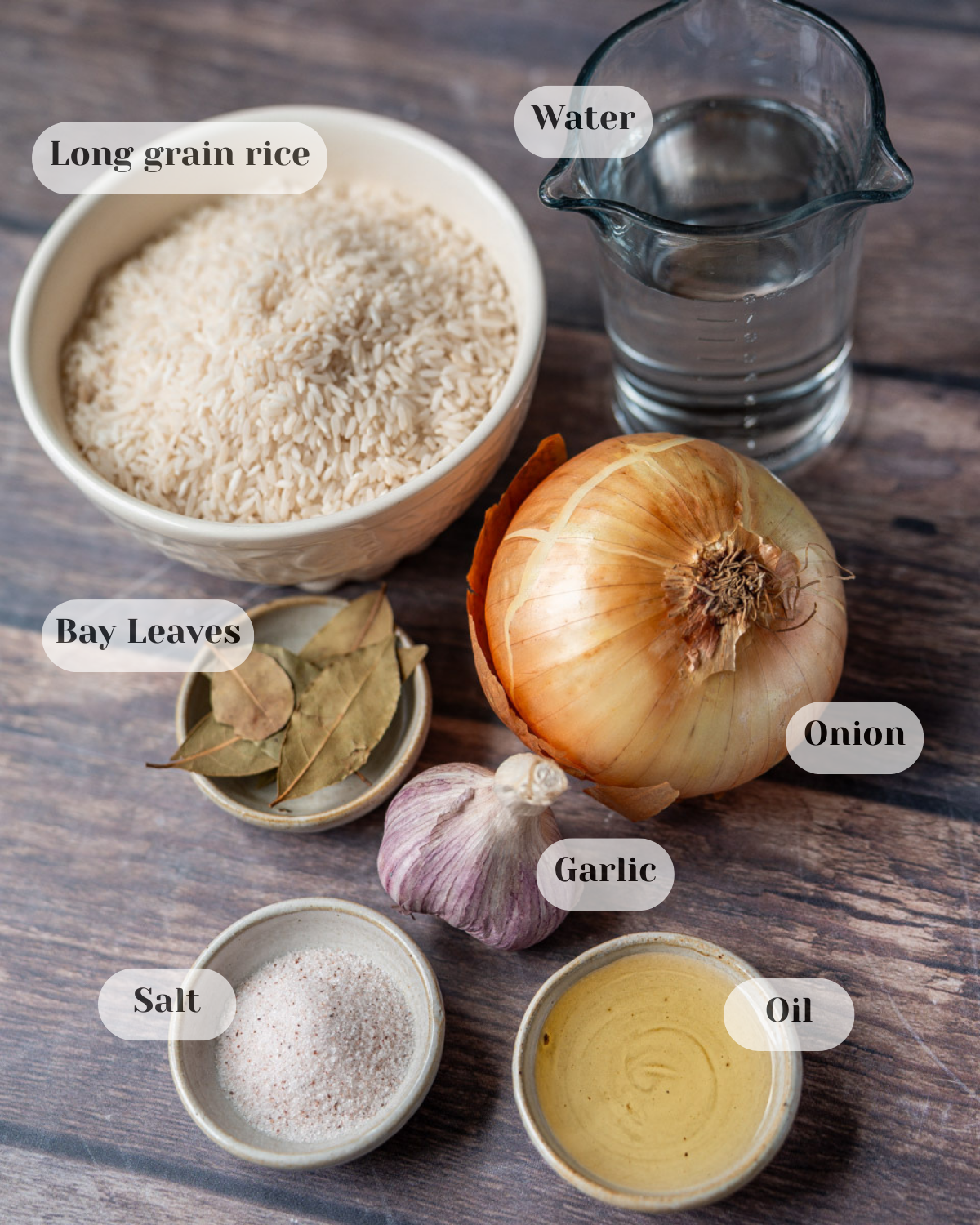
🍚 Rice
Long-grain white rice is ideal for this recipe because it can remain light and separated when cooked correctly. It is also one of the varieties most commonly used in Costa Rican homes.
When possible, choose rice with a high percentage of whole grains. Rice containing many broken grains tends to release more starch during cooking and may produce a softer or stickier result.
I found my long-grain white rice at the Mexican store, but if it’s hard for you to find one nearby, I’ve also tried organic white rice and it’s absolutely delicious. If you cannot find Costa Rican rice, any good-quality long-grain white rice will work.
🧈Oil
The oil lightly coats the rice and helps keep the grains from sticking together. You can use vegetable, avocado, canola, or another neutral-flavored cooking oil.
Olive or coconut oil can also be used, but they may add a flavor that is not typical of traditional Costa Rican white rice.
🧅🧄 Onions and garlic
Onion and garlic are not strictly necessary, but they give the rice the familiar homemade flavor found in many Costa Rican kitchens.
Chop them finely so they distribute evenly throughout the rice without affecting its texture.
🌿 Bay Leaves
I haven’t seen many Costa Rican chefs or home cooks add bay leaves to rice, but we definitely use them a lot-especially in caldos (broths), stews, and definitely when making beans (stay tuned, that recipe will be available next week!). Since we use bay leaves so often in other dishes, I started adding them to my rice many years ago, and I absolutely love the flavor they bring. It’s not a typical Costa Rican combination, but hey-I’m Costa Rican, so I’m covered. 😉
🧂 Salt
Ahh! Not much to say about this, other than I only eat unsalted rice when I go to Asian restaurants and similar places. Costa Rican white rice will always be cooked with salt.
💧 Water
Please don’t follow the 2:1 ratio when cooking rice. It means adding 2 cups of water for every cup of rice, and that almost always leads to mushy rice. Unless that’s the texture you want, it’s better to adjust the water depending on the variety of rice you’re using. By following my method—adding only 1 ½ cups of water per 1 cup of rice and then adjusting the water later—you’ll always end up with fluffy white rice. I explain more about this process in the step-by-step photos below.
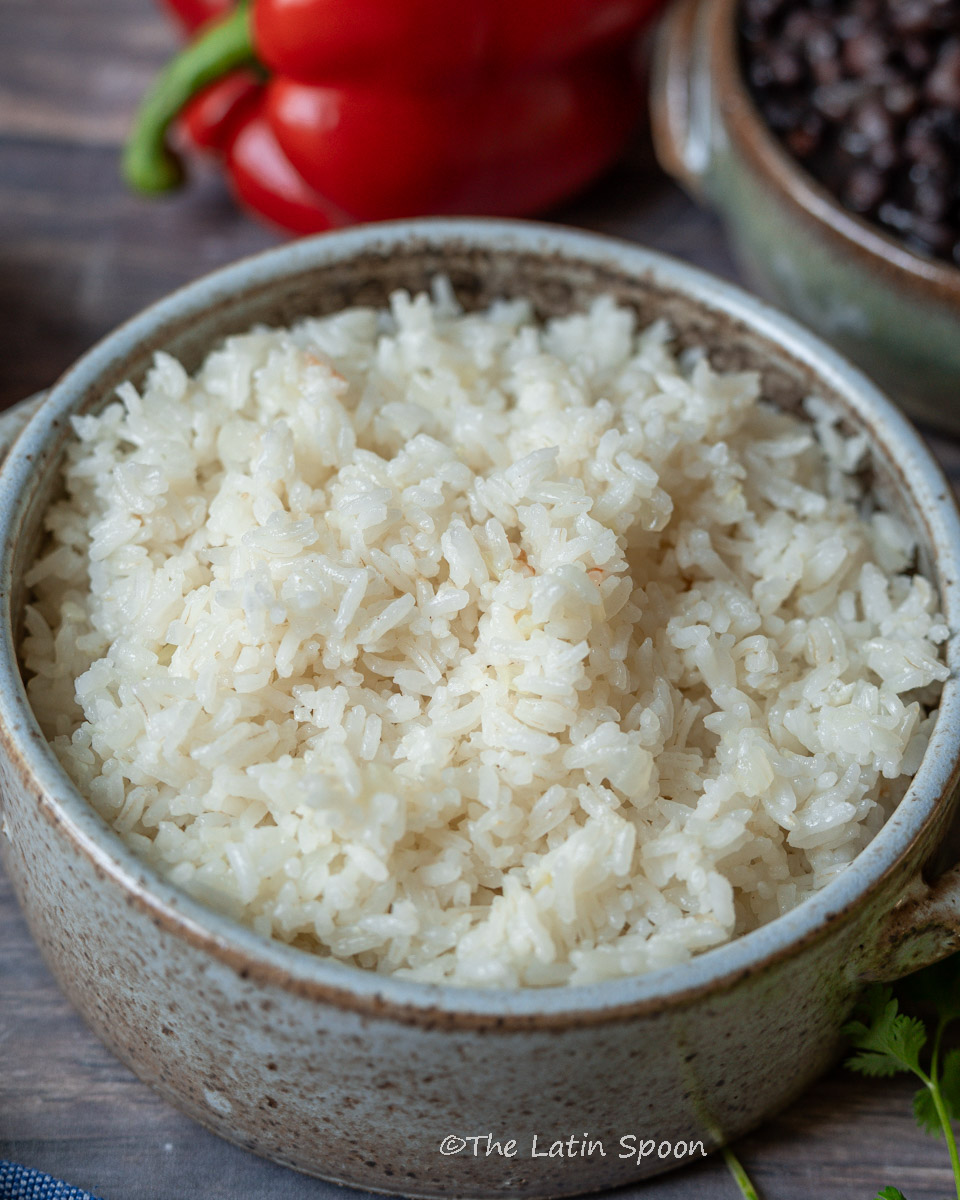
💡 Tips for Perfectly Fluffy White Rice
- Start by rinsing your rice. This step is not mandatory, but when you do it, you remove the starches that make rice sticky once cooked. If that’s the consistency you’re aiming for, then don’t rinse your rice—but if you want light, separate grains instead of one big clump, rinse it 3–4 times or until the water runs clear.
- Always add hot water to your pan. This speeds up the cooking process and allows the rice to start cooking immediately after you add the water. If you add cold water instead, the stove will have to work harder to heat it up before cooking begins, which can result in mushy rice.
- Avoid adding ingredients that could stain your rice, such as cilantro or green and red bell peppers. While these add great flavor, their color will leach into the water as they cook, staining the rice. If you want that color, go for it—but if you’re looking for classic white rice, skip these ingredients.
- Do not stir constantly or remove the lid while cooking. Each time you lift the lid, the temperature inside the pan drops, and every stir introduces cool air—both of which can lead to mushy rice.
- If you don’t want to manage a pan on the stove, I highly recommend getting a rice cooker. Modern rice cookers do an excellent job, and they’re so advanced that you can set them and walk away—or simply focus on cooking the rest of your meal.
How to Make White Rice with Pictures
Follow the step-by-step guide below to learn how to make fluffy, perfectly cooked white rice, with helpful photos to guide you through each step.
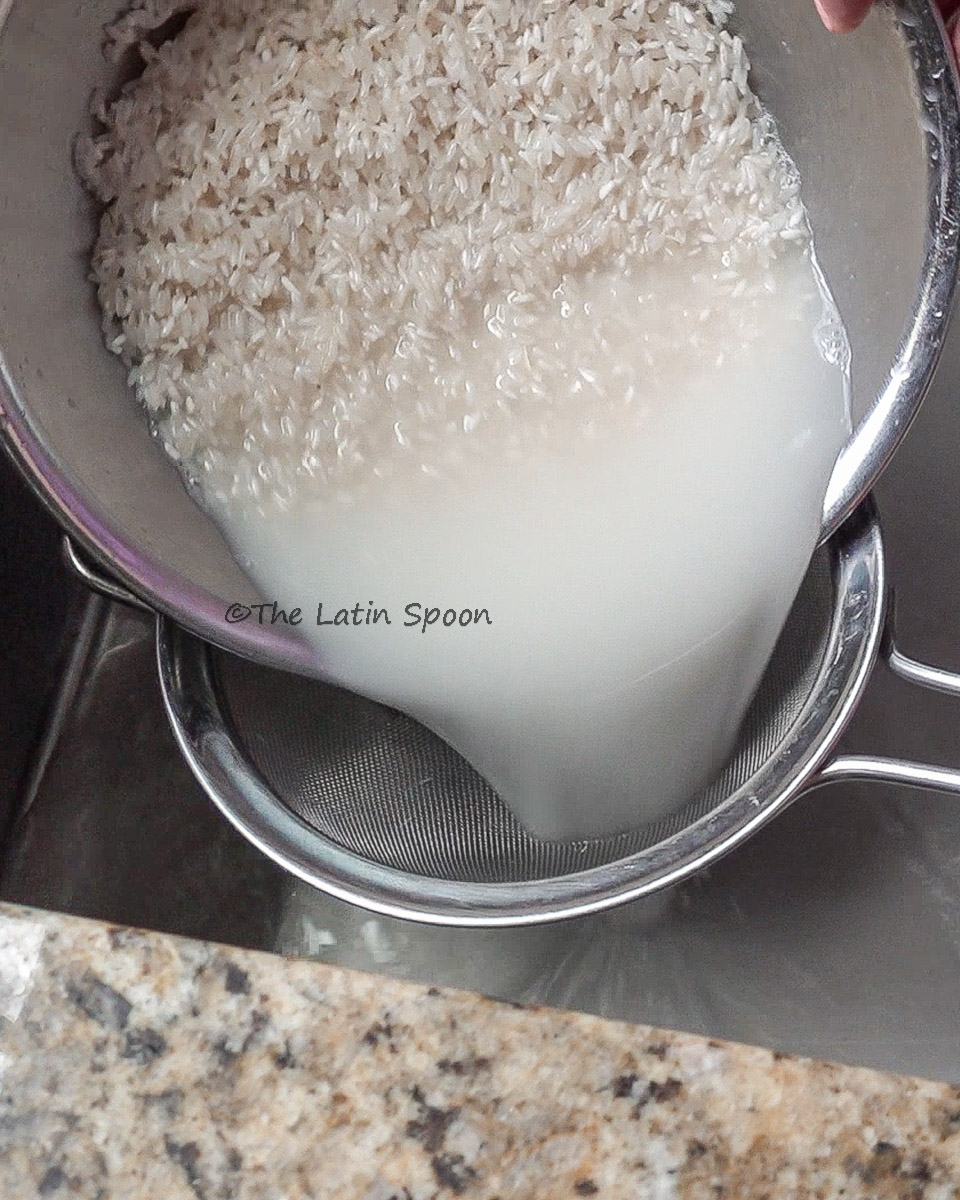
Step 1: Rinse your rice
Add plenty of water to a bowl of raw rice. Gently stir to wash away the starches. Drain and repeat 2–3 times, until the water runs clear.
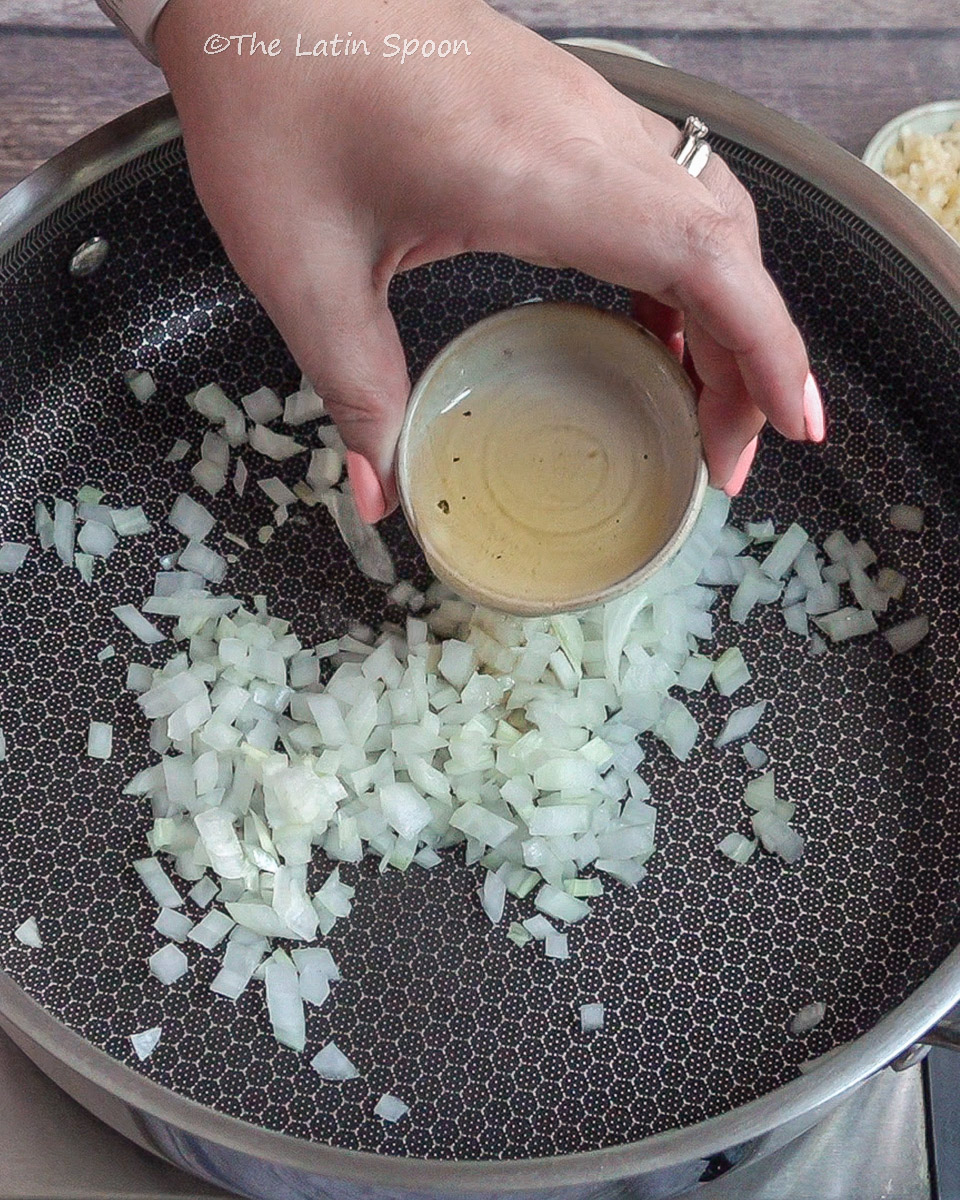
Step 2: Sauté your vegetables
Heat the oil over medium heat. Add the onions and garlic, and cook gently—don’t let them burn. Meanwhile, bring plenty of water to a boil.
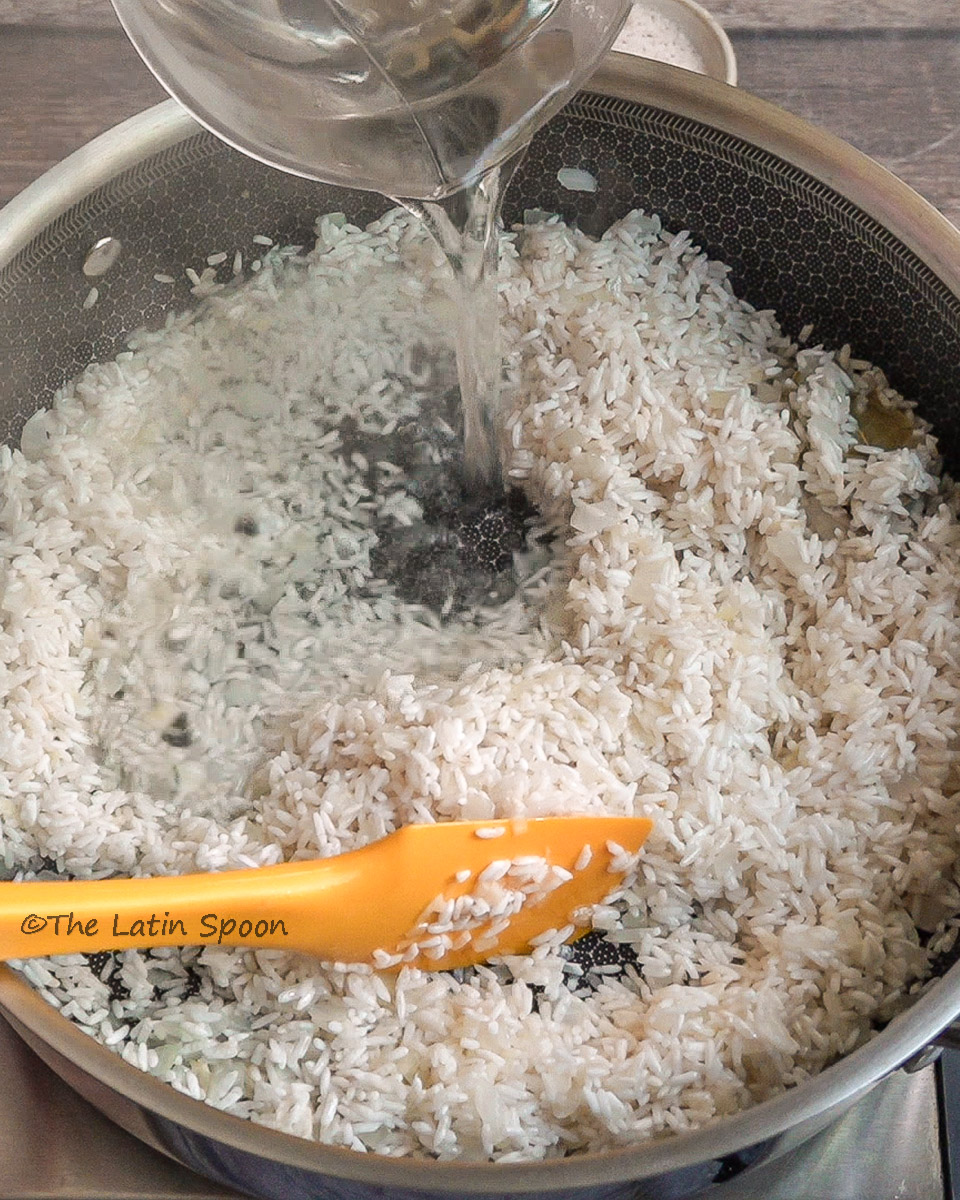
Step 3: Add Rice and Seasonings
Add the rice, hot water, salt, and bay leaves. Give it a quick stir, then cover with a lid.
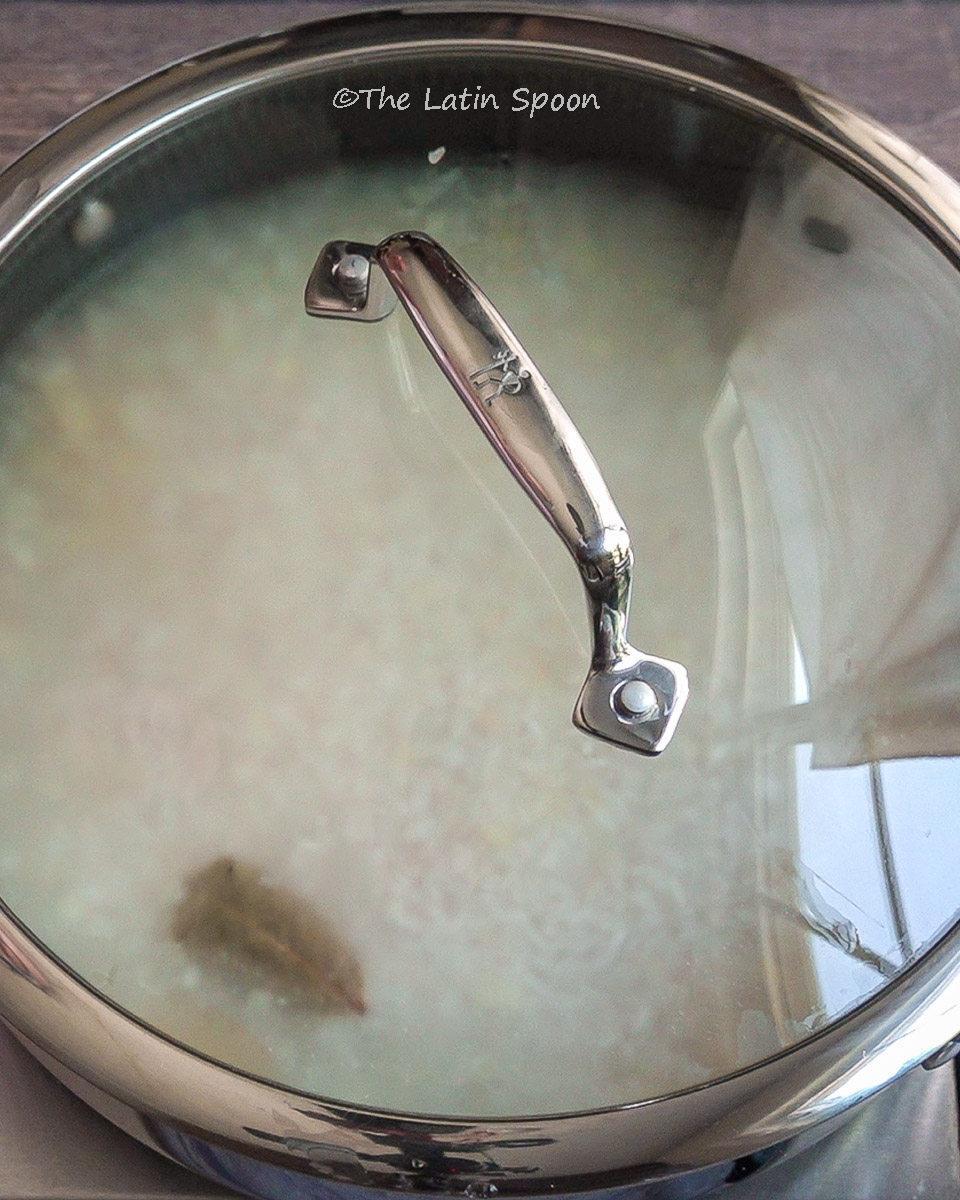
Step 4: Cook the Rice
Cook for 10 minutes, or until the water has evaporated and the rice has absorbed the liquid. Do not uncover the lid during the cooking process.
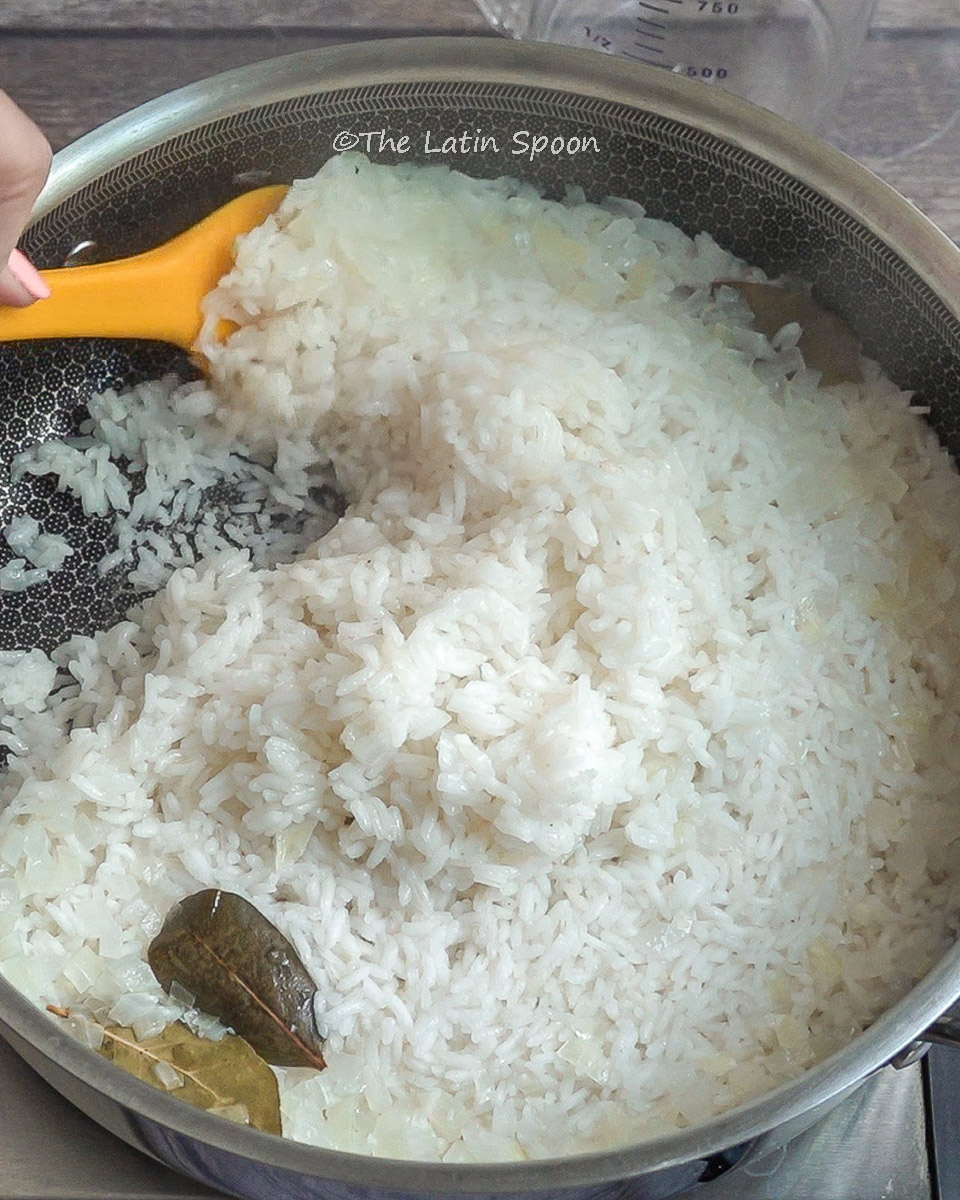
Step 5: Stir and Adjust Seasoning
Gently stir the rice, taste it, and season according to your liking.
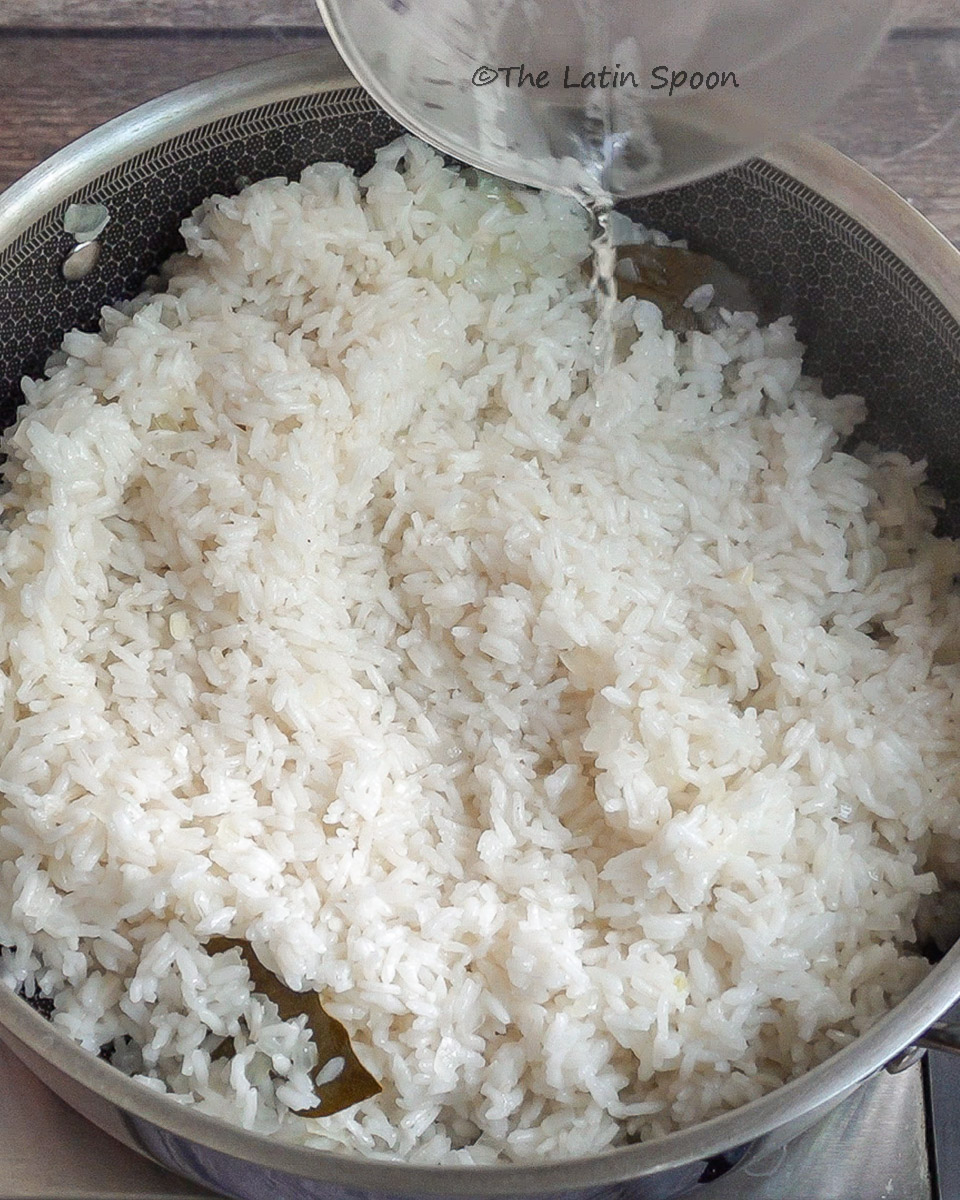
Step 6: Add a Second Round of Water
Add no more than ¼ cup of water, then cover again with the lid. Cook for 10 more minutes, or until the rice is fully cooked.
💡Frequently Asked Questions
If you can’t find long-grain white rice, you can substitute it with other varieties like jasmine, basmati, or even short-grain rice. Each type of rice has its own unique flavor profile—they’re all delicious, but they will give the recipe a slightly different taste. Ultimately, any of these options will still work beautifully.
Every day. There’s no other answer.
Leftover rice is incredibly versatile. Use it to prepare fried rice, add it to soups, make a quick rice bowl with vegetables and protein, or use it as a filling for stuffed peppers. Since the grains become slightly firmer after refrigeration, leftover rice works especially well in recipes that require reheating or sautéing.
If you’re warming it on the stove or in the microwave, add a few drops of water first, then heat until it reaches the desired temperature.
Yes, you can. Although I would follow the rice cooker’s instructions for the amount of water to add.
It can last up to 10 days, but I don’t know precisely—mine never lasts more than 3 days. 😊
Yes, you can! I actually love to do this. I cook several cups of rice, then put them in the freezer, it thaws beautifully, and you’d never guess it was frozen.
Literally anything. Costa Ricans pair it with beans, lentils, potatoes, chicken, pork, salads, and more. We even make it into a dessert—have you ever tried rice pudding?
Step-by-Step Photos to Achieve Perfectly Cooked White Rice
Follow the step-by-step photos below to make perfectly cooked rice, every time.
🌿 Bringing It All Together
And that’s it—my way of making perfectly fluffy Costa Rican white rice. It’s simple, comforting, and such a big part of our table. Whether you pair it with beans, serve it alongside your favorite dish, or just enjoy it on its own, I hope it brings a little taste of Costa Rica to your kitchen.
Eat it with this delicious Yucca Flower Picadillo.
Oh, and speaking of beans—don’t miss next week’s recipe for Black Beans Costa Rican Style. They’re the perfect match for this rice, and together they make one of the most loved combinations in our cuisine. Make sure to check out my Gallo Pinto recipe, where they become one of Costa Rica’s most beloved meals.
Besitos (kisses),
Mara
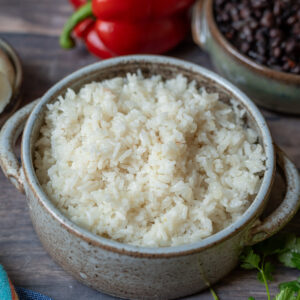
Fluffy White Rice Recipe
Equipment
- Large Pan
- Knife and cutting board
- Rice Cooker Optional
Ingredients
- 2 cups long-grain white rice
- 2 tablespoons oil
- ½ cup chopped onion
- 2-3 bay leaves
- 2-3 garlic cloves
- 1 ½ teaspoons salt
- 3 ¼ cups boiling water
Instructions
- Add plenty of water to a bowl of raw rice. Gently stir to wash away the starches. Drain and repeat 2–3 times, until the water runs clear.
- Warm up a large pot over medium heat. Once hot, add the onions and oil; cook for 2–3 minutes, or until the onions turn translucent. Add the garlic and cook for about 30 seconds—don’t let it burn. Meanwhile, bring plenty of water to a boil.
- Add the rice, hot water, salt, and bay leaves. Give it a quick stir, then cover with a lid.
- Cook for 10 minutes, or until the water has evaporated and the rice has absorbed the liquid. Do not uncover the lid during cooking.
- Gently stir the rice, taste it, and season according to your liking.
- Add no more than ¼ cup of water, then cover again with the lid. Cook for 10 more minutes, or until the rice is fully cooked.
Video
Notes
- Store leftover rice in an airtight container in the fridge. Let it cool completely before refrigerating to avoid excess moisture.
- Freeze cooked rice in an airtight container or freezer bag. Thaw overnight in the fridge or reheat directly from frozen—add a splash of water and cover to keep it fluffy.
- When reheating, add a few drops of water and cover to help restore moisture.
- For a richer flavor, substitute part or all of the water with chicken or vegetable broth.
Leave a Reply