
With the right steps and a few simple ingredients, you can create a flavorful, comforting shrimp and rice that will have everyone asking for seconds.
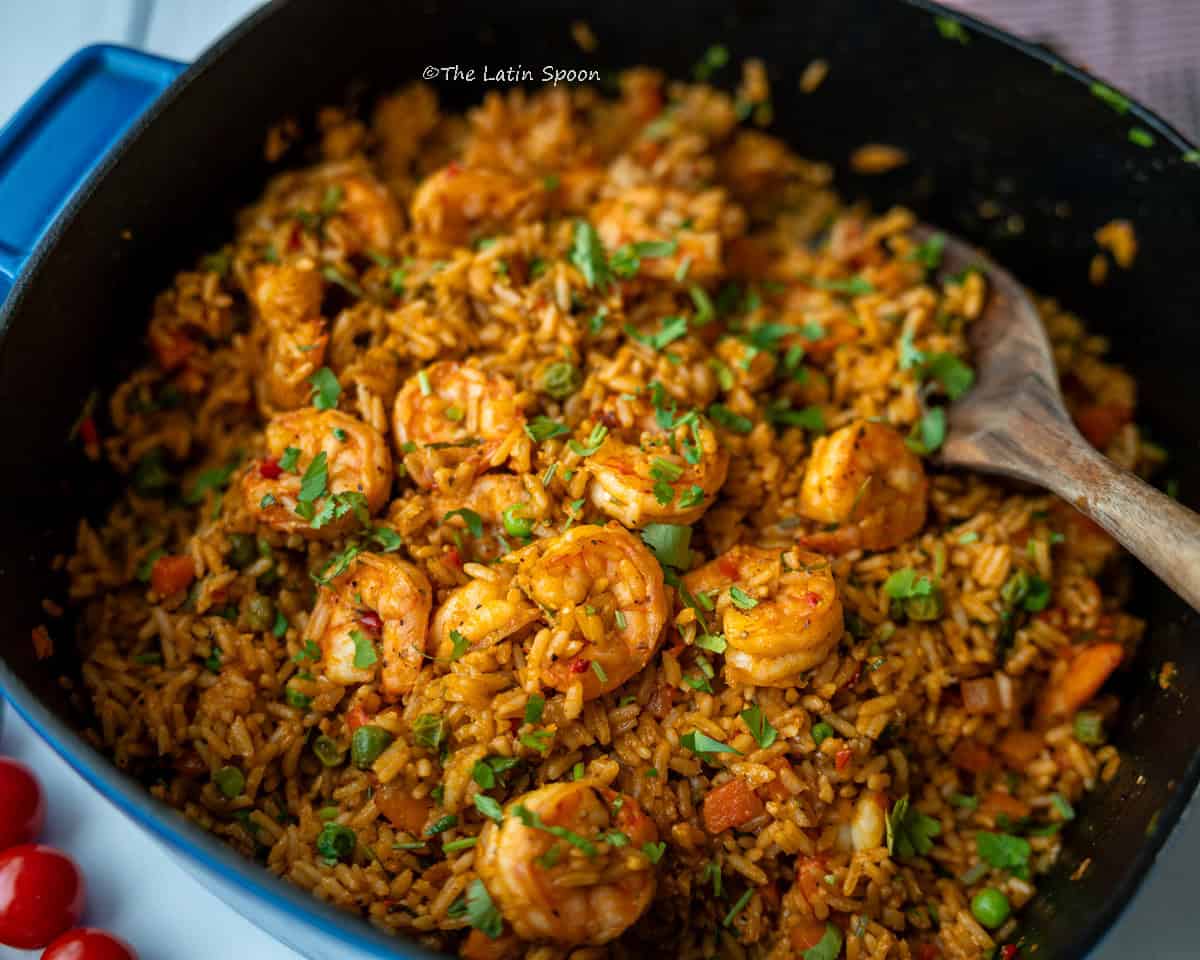
Arroz con camarones is a dish that is especially popular in many coastal areas of Latin America, where seafood and rice are both common parts of everyday cooking. Different countries and regions prepare their own versions, but the idea is very similar: combining shrimp, rice, vegetables, and seasonings into a dish that is practical, flavorful, and well suited for sharing.
Because this dish can be prepared in so many different ways, here I am sharing my own version. Like many traditional recipes, it can also serve as a base, allowing each person to adjust the ingredients and make it in the way that best suits their taste and what they have on hand.
Watch Video Here
Since it is very easy to obtain shrimp in Costa Rica, mostly from the Pacific side, arroz con camarones is, or at least was when I was growing up, a fancy yet affordable dish to serve a big crowd of guests whenever you had a party or a celebration. Not as popular as its cousin arroz con pollo (rice with chicken), but I would say still popular.
By the way, let me know if you want me to show you how to make arroz con pollo.
Now that I live in the United States and it’s easy for me to find frozen shrimp almost everywhere, this is a recipe I like to make often since it’s easy, very affordable, and full of flavor. And if you have a good rice to shrimp ratio, it can also be a very balanced dish with carbs and protein, since shrimp is high in protein.
This is what we are going to need.
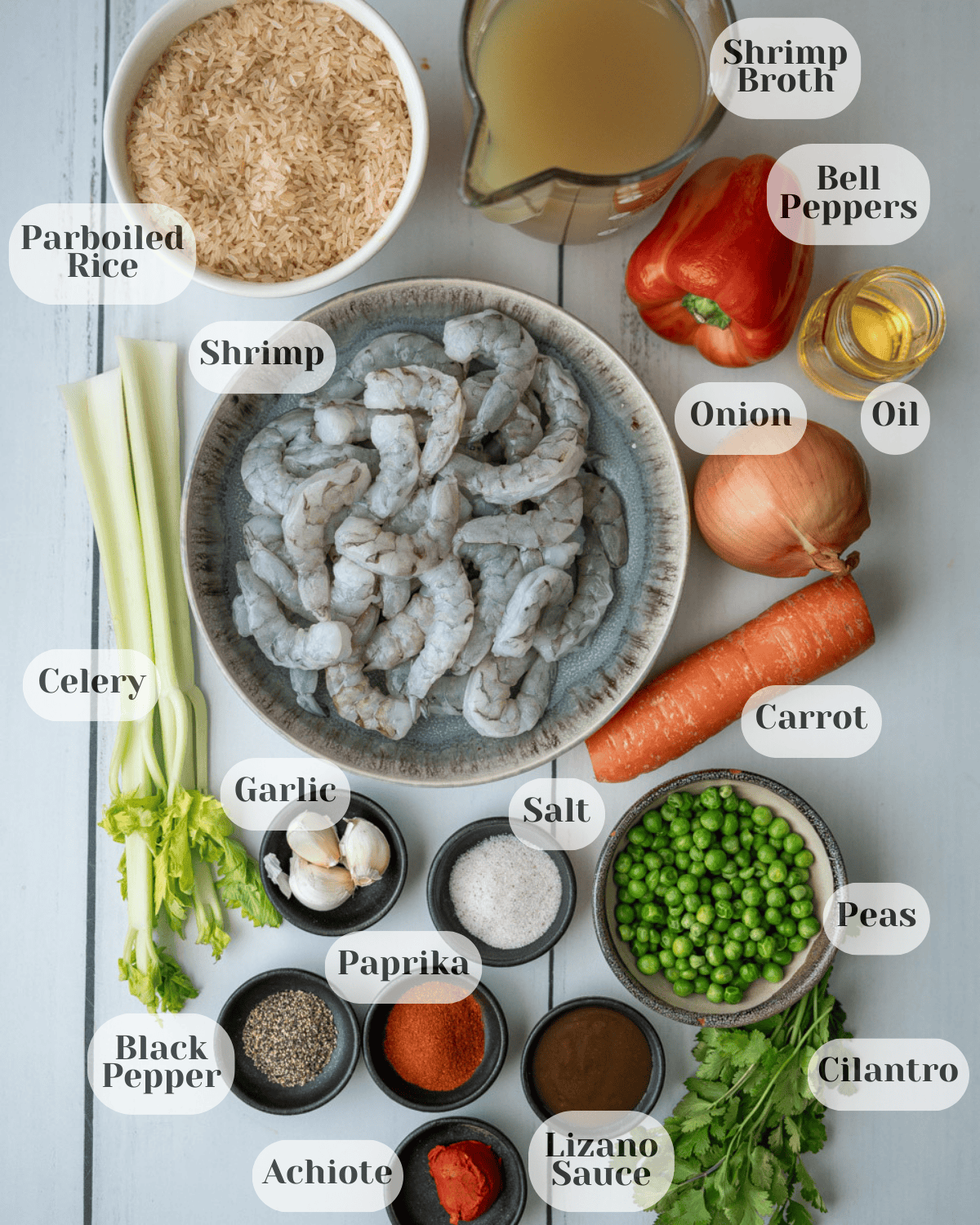
Ingredients to make Arroz con Camarones
These are the ingredients I used in this recipe. For more options or substitutions, check the FAQs section.
🍤 Shrimp
Any type of shrimp will work here, no matter the color, size, or whether it’s fresh or frozen. I do want to mention that a high percentage, if not most, of the shrimp found in the United States is sold frozen, so I recommend buying it that way and thawing it at home. You can leave it in the fridge overnight or thaw it under cold running water.
When you buy “fresh” shrimp at the store, it has usually been previously frozen and thawed, and you don’t always know how long it has been sitting there. By buying frozen shrimp, you’re more likely getting a fresher option.
🦐 Shrimp stock
I made my own Shrimp Stock for this recipe, and I’m sharing it here in case you’d like to make it too. If you don’t have shrimp shells or are not in the mood to make it, you can buy it at your regular grocery store under the name seafood stock or shrimp bouillon. Both options work.
🍚 Rice
For this recipe, I am using parboiled rice, which is a type of rice that is soaked, steamed, and dried while still in its husk, partially cooking it before milling. The process, not the grain itself, is what makes this rice different from regular rice.
It is less sticky, takes longer to cook, and has a slightly different flavor, not better or worse, just different. It also offers some health benefits, like a lower glycemic index, which can help with blood sugar management.
🧡 Achiote
Also known as annatto, it is what gives the rice its warm color. It has a mild, earthy flavor with slightly peppery notes, and it’s mainly used to add color and depth to dishes without overpowering them. It can be found as achiote paste, achiote powder, or achiote-infused oil, and any of these can work depending on what is available where you live. Find it here.
🥫 Lizano Sauce
It’s a traditional Costa Rican condiment with a slightly tangy, mildly sweet, and spiced flavor that adds a very distinctive touch to many dishes. Learn how to make Lizano Sauce from scratch here. And if want to skip the process and get it delivered at your door, get Lizano Sauce here.
💡 Helpful Tips For Delicious Arroz Con Camarones
- Try to chop the vegetables into similar-sized pieces so they cook more evenly and blend better into the rice.
- Let the achiote cook briefly in the oil before adding the vegetables so it can release its color more evenly.
- If possible, use shrimp stock instead of water, since it gives the rice a much deeper seafood flavor.
- Once you cover the pot, avoid removing the lid too early, because the trapped heat helps the rice cook properly.
- Taste the rice before adding the shrimp so you still have time to adjust the seasoning if needed.
- Add the shrimp near the end so they stay tender and do not overcook.
- If you use a different type of rice, keep in mind that you may need to adjust the amount of liquid.
How to Make It Step by Step
Don’t forget the video is also available for this recipe, but if you prefer pictures, let’s get started.
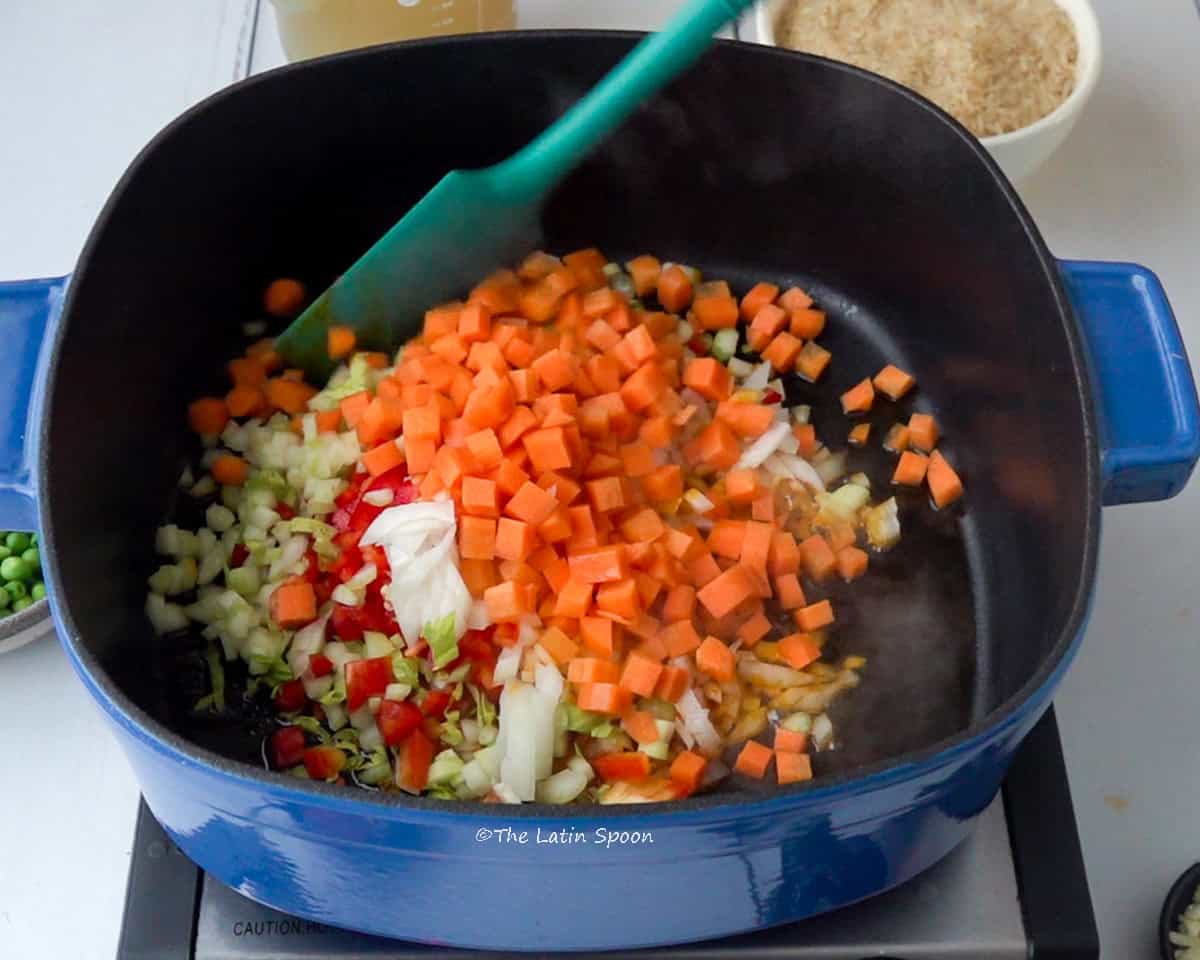
Step 1: Sauté all of the veggies.
Add oil and achiote to a large pot and cook over medium heat for 2 to 3 minutes. Then add the onion, bell peppers, celery, carrots, and finely chopped garlic, and cook for 3 to 5 minutes.
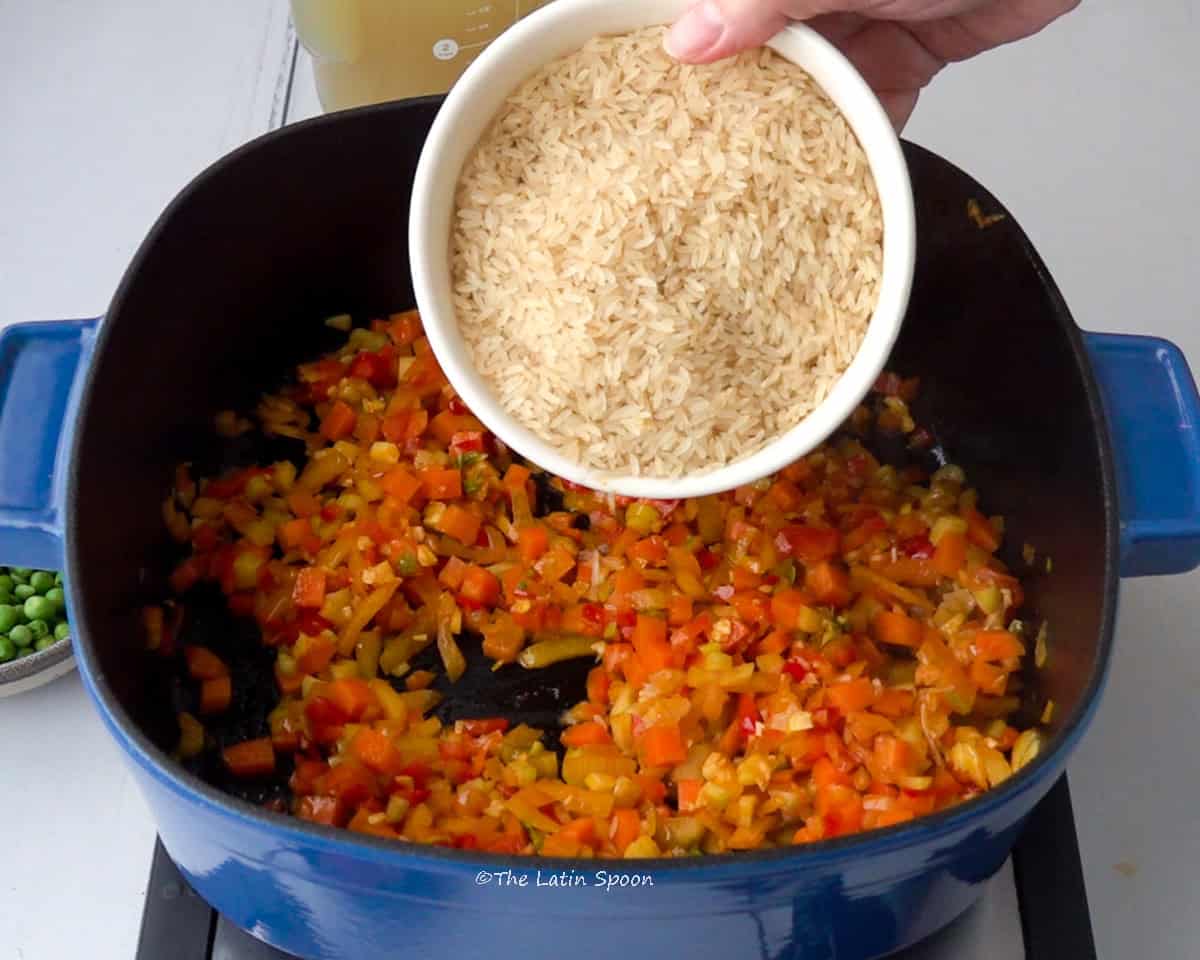
Step 2: Add the rice
Parboiled rice does not need to be rinsed before cooking, but if you are using a different type of rice and would like to rinse it first, this is the time to do it.
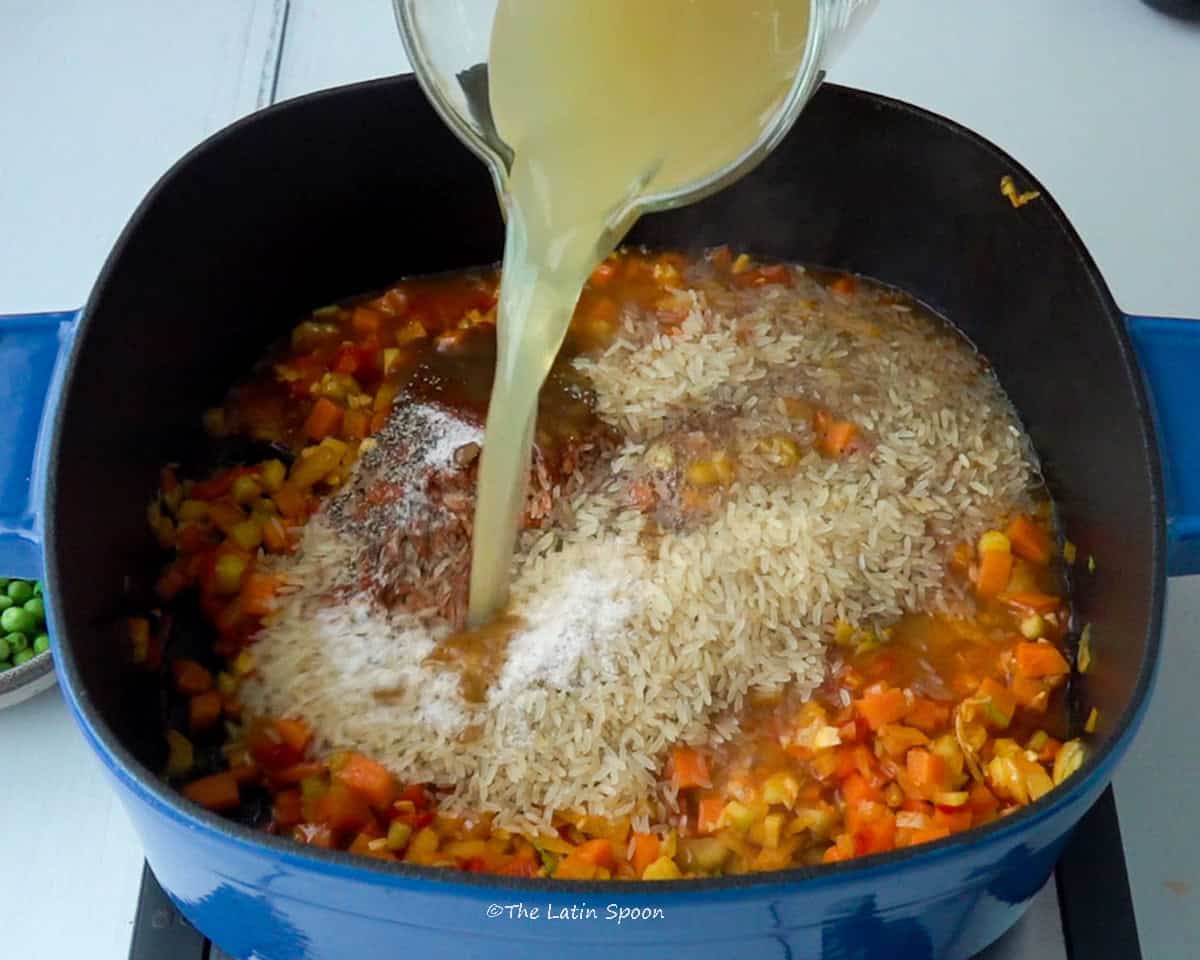
Step 3: Add your seasoning and stock
Add paprika, black pepper, salt, and Salsa Lizano, then pour in the shrimp stock. You can substitute with water, but the flavor won’t be the same.
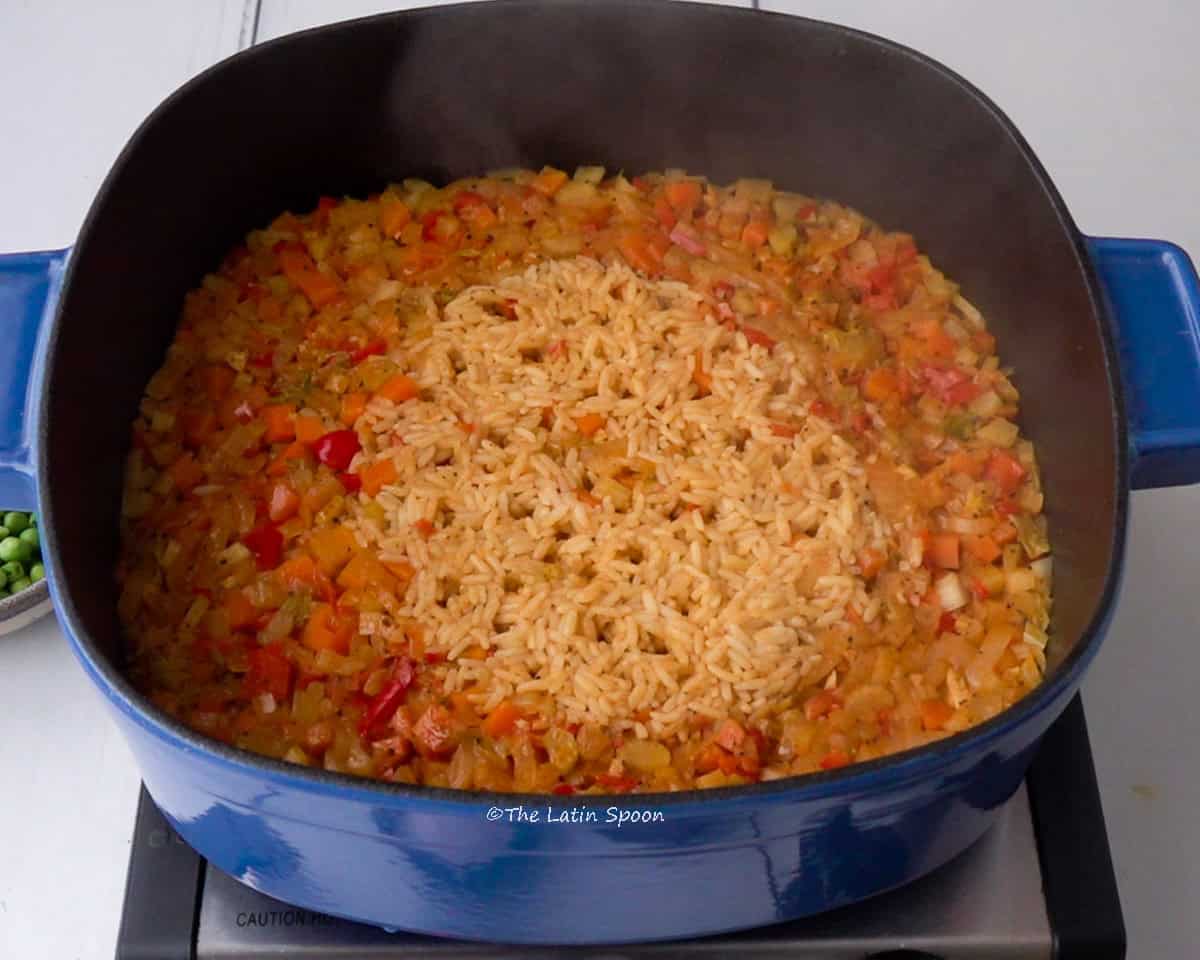
Step 4: Cover and cook
Put the lid on and cook the rice for 25 minutes. Do not remove the lid during this time, let the rice cook and absorb all those flavors.
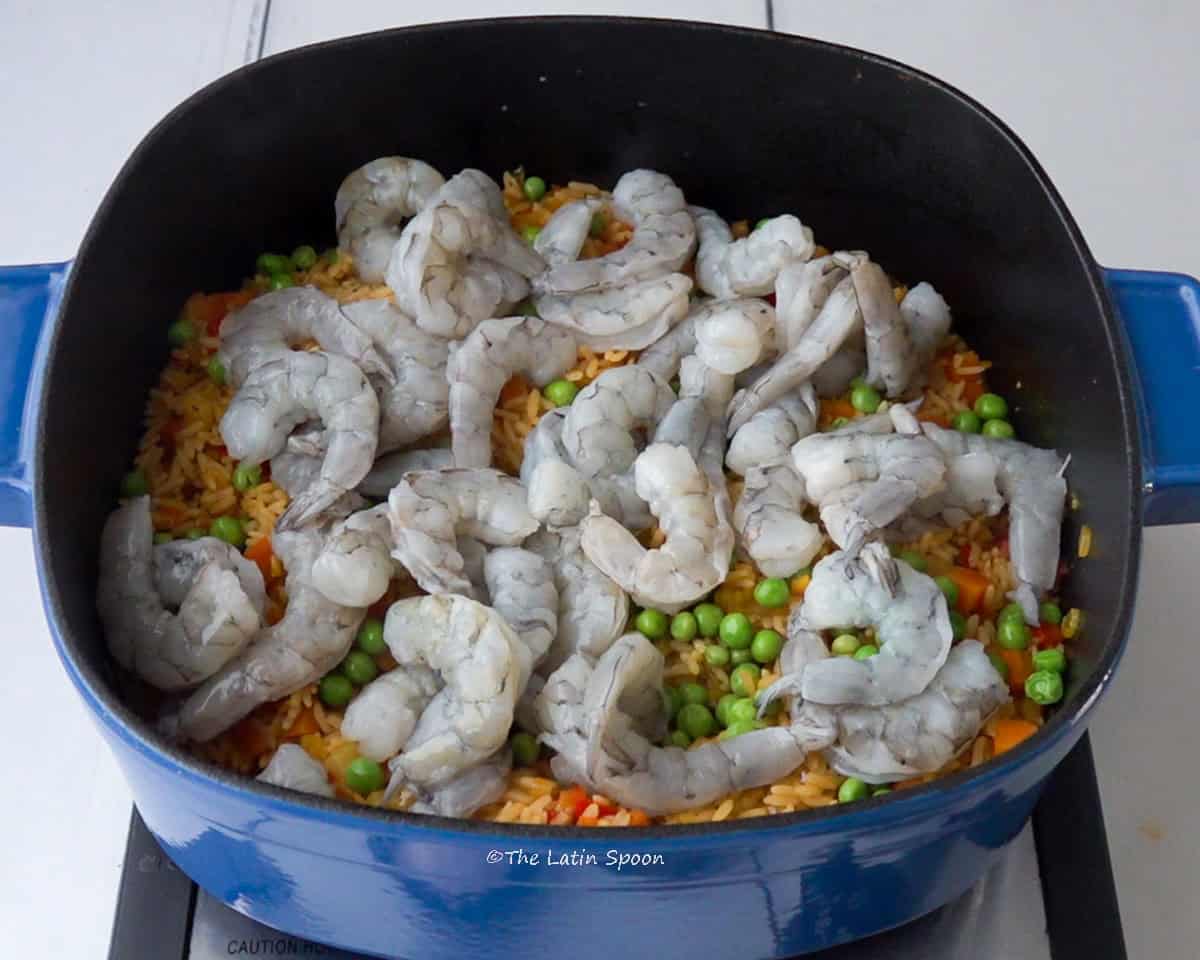
Step 5: Add peas and shrimp
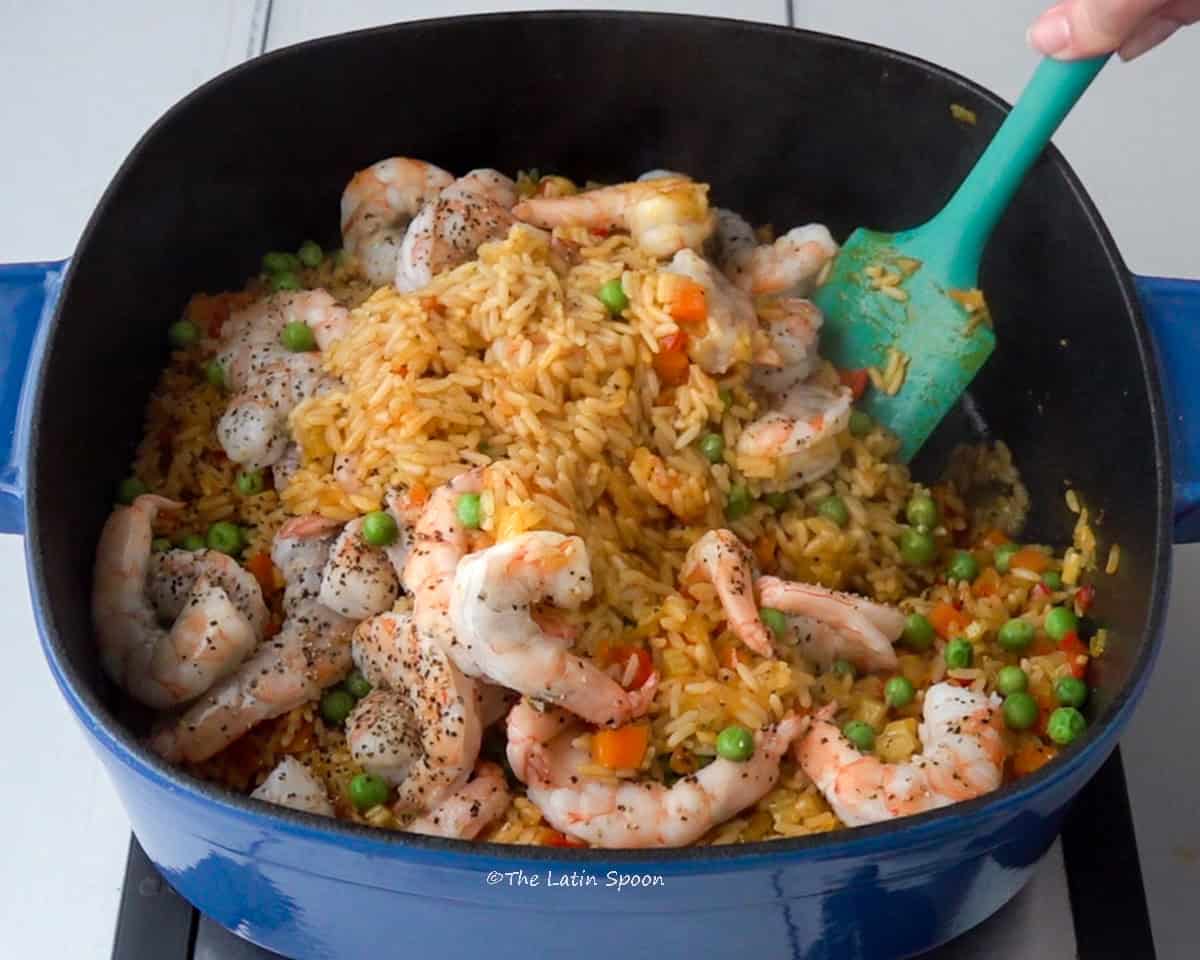
Once the time has passed, remove the lid and add the peas and shrimp. Season the shrimp with salt and pepper, put the lid back on, and cook for about 5 more minutes.
Step 6: Finish cooking
Remove the lid. Mix the shrimp into the rice and cook for 3 to 5 more minutes, depending on the size of the shrimp.
💡FAQs About Shrimp And Rice
Yes, you can use any type of rice you have available. Just keep in mind that cooking time and liquid ratios may vary depending on the type of rice, so you may need to adjust accordingly.
You can use water, but shrimp stock adds much more flavor to the dish. It doesn’t have to be shrimp stock specifically, you can also use seafood stock or shrimp bouillon, which are usually easy to find at most grocery stores.
Add the shrimp during the last few minutes of cooking. Ideally, around the last 3 to 5 minutes, but even a little earlier can still work. The key is not to add them at the beginning while the rice is still raw, otherwise they can become overcooked and rubbery.
Do not worry if you cannot find these two. They do add a lot of flavor, but you can make up for it by adjusting your seasonings. Just make sure not to skip the shrimp stock, since it adds a lot of flavor to the dish.
Yes, you can make arroz con camarones ahead of time and store it in the refrigerator. Reheat it gently on the stove or in the microwave, adding a small splash of water if needed to bring back moisture.
👉A Dish Worth Making Again and Again
Whether you decide to make shrimp stock or not, and even if you use a store-bought option, this is a delicious recipe you can make even if you are not Costa Rican or have never visited the country. It’s easy to make, full of flavor, and a balanced meal for you and your family.
Here are some recipes you can pair it with:
First, the link for the Shrimp Stock.
Then add a Heart of Palm Salad on the side. I will also be working on a refried beans recipe, so stay tuned for that.
Finish your meal with a delicious dessert like Fig Cake with Condensed Milk Glaze.
Let me know in the comments if there’s another Costa Rican recipe you would like to see next here on the blog.
Besitos (Kisses),
Mara

Shrimp and Rice (Arroz con camarones)
Equipment
- Cutting board and knife
- Measuring cups and spoons
- Large Pot or Dutch Oven
- Wooden Spoon or spatula
Ingredients
- 3 tablespoons oil
- 2 teaspoons achiote
- ½ yellow or sweet onion
- ½ bell pepper
- 2 sticks celery
- 2 medium carrots
- 2 teaspoons finely minced garlic
- 2 cups rice
- 2 teaspoons paprika
- 1 teaspoon black pepper
- 2 teaspoons salt
- 1 tablespoon Lizano Sauce
- 4 cups shrimp stock
- ½ cup peas
- 1 lb around 40 shrimp
- 1 small batch cilantro
Instructions
- Heat oil in a large pot over medium heat. Add achiote and let it melt for about 1 minute.
- Add onion, bell pepper, celery, and carrots. Cook for 2 to 3 minutes, then add the garlic and continue cooking for about 1 more minute, stirring frequently so nothing burns.
- Add the rice and stir to coat it with the oil and achiote. Add paprika, black pepper, salt, and Salsa Lizano. Stir everything well so the rice is evenly seasoned and coated with all the flavors.
- Pour in the shrimp stock, (Recipe available on the blog) mix well, and taste. This is the moment to adjust the seasoning if needed before the rice finishes cooking.
- Cover with a lid and cook for 25 minutes without opening the pot.
- After 25 minutes, remove the lid and stir. The rice should be about 90% cooked and still have a little liquid.
- Add peas and shrimp. Lightly season the shrimp with salt and black pepper. Cover again and cook for 5 minutes.
- Remove the lid, stir, and cook for an additional 3 to 5 minutes, depending on the size of the shrimp, until fully cooked.
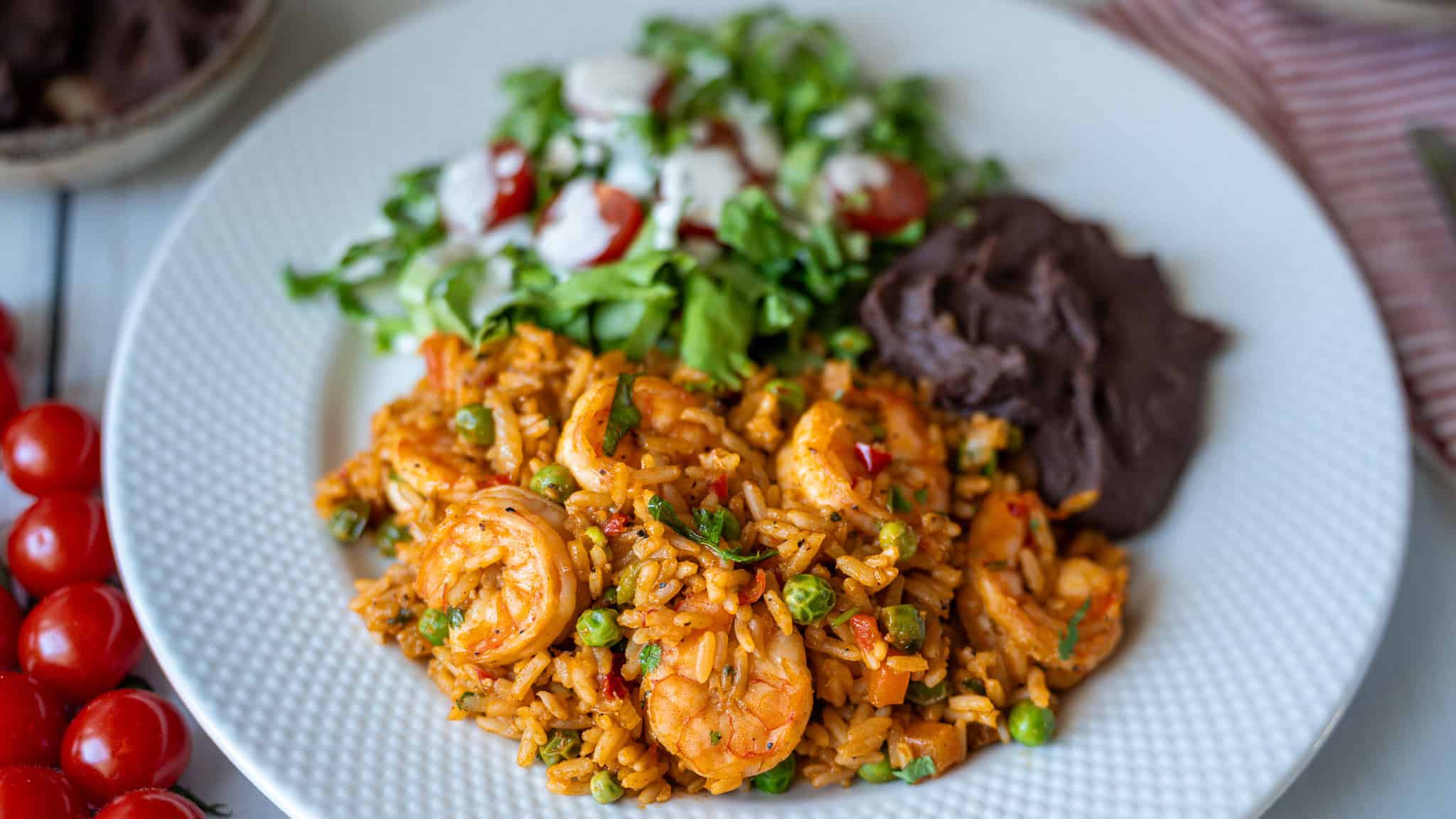
- Turn off the heat, add fresh cilantro, and stir. Serve with a side of salad, refried beans, and enjoy with family and friends.
Video
Notes
- Chop vegetables evenly for better cooking.
- If your rice looks too wet, cook uncovered for a few extra minutes to let the excess liquid evaporate.
- Add shrimp at the end to avoid overcooking.
- Adjust liquid if using a different rice.
- Large shrimp work best for this recipe since they are less likely to overcook.
- You can swap peas for edamame or soybeans for a different texture and added protein.
- Adjust salt carefully if using store-bought stock or bouillon, since they can already contain sodium.



Leave a Reply